So there’s a lot happening behind the scenes with the FabLearn Fellows! The new cohort is starting to meet, virtually, of course. New blog posts and videos will be coming soon. We are in the very early stages of planning Volume 3 of the Meaningful Making book series.
And the previous cohorts of FabLearn Fellows are doing interesting things too! Here are some recent posts from this school year:
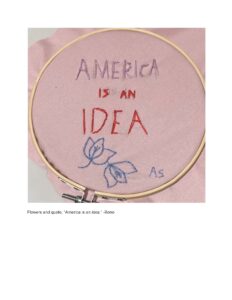
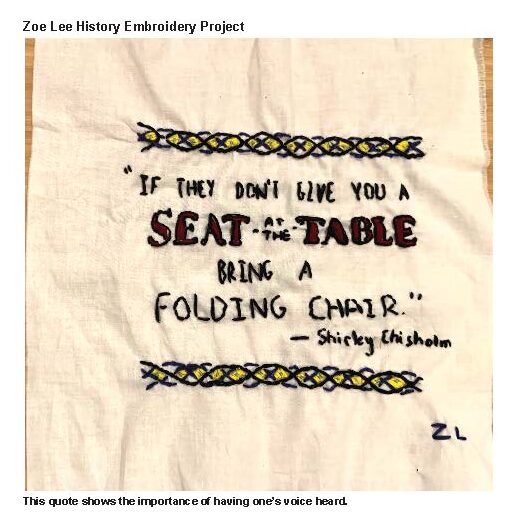
Making Remotely: Sending Embroidery Kits Home and Teaching on Zoom by Heather Pang. Heather shares a project for her remote history classes using embroidery kits sent home to students. Reflecting on this project, Heather says, “Looking back on the work, I think this project will stay in my class even when we are back to full time in person school. It unites the history of the craft, which is important in American history, women’s history, and economic history, (and really any period of history, those are just the ones that fit in my class) with practicing the craft. It is an opportunity for students to learn something that might be completely new to them, but is an ancient craft.”
Weekend Maker Camp under Covid-19 conditions by Mathias Wunderlich. This video and interview showcases a weekend Maker Camp, a.k.a. the 48 Hour Tinkering Monastery, under COVID-19 conditions. Mathias shares the planning and the process that went into making this a safe and meaningful experience for everyone involved.

A mole of aluminum
Mole Day in the Makerspace by Josh Ajima. Join Josh Ajima in celebrating Mole Day in a maker way. Believe it or not, Mole Day is an actual, if unofficial, holiday which according to the Wikipedia article, “… is celebrated among chemists, chemistry students and chemistry enthusiasts on October 23, between 6:02 a.m. and 6:02 p.m., making the date 6:02 10/23 in the American style of writing dates. The time and date are derived from the Avogadro number, which is approximately 6.02×10²³, defining the number of particles (atoms or molecules) in one mole (mol) of substance, one of the seven base SI units.”
Cherokee Language Syllabary for 3D Design in Tinkercad by Josh Ajima. Josh shares an idea for using 3D design to allow the use of characters in any language in student projects, such as popular makerspace projects like making a keychain using your own name. “Converting non-roman character sets into a library of 3D glyphs, allows students to easily create their name in the target language. The UN Declaration on the Rights of Indigenous Peoples recognizes the right to languages as an inherent right for indigenous peoples. Furthermore the United Nation recognizes language rights as the direct application of basic human rights such as freedom of expression. Creating design aids such as the Cherokee Language Syllabary in programs such as Tinkercad works to promote and normalize these rights in the 3D design world.”
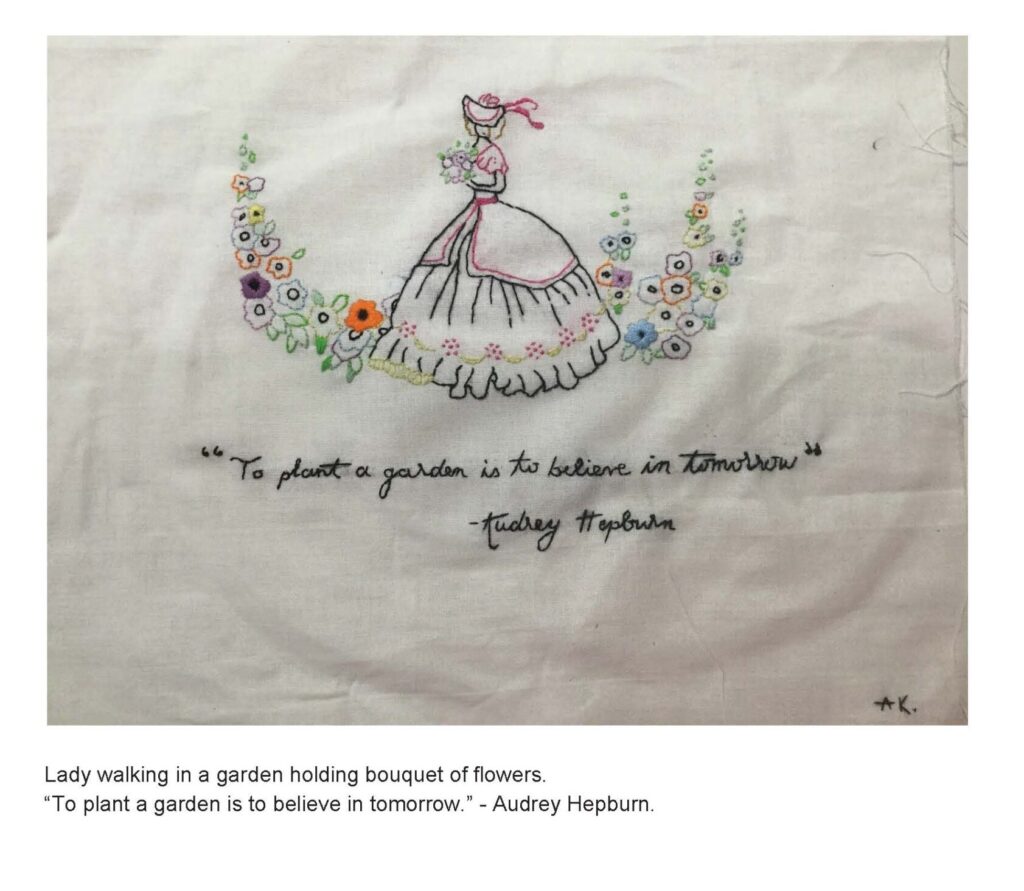
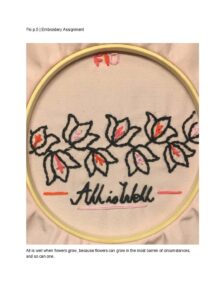 In the fall my school was fully remote, but we had the opportunity to send supplies home before class started. I was ambitious, and I put together two different sets of making supplies as well as some printed materials for my 8th grade US history class.
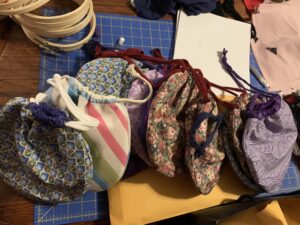 not lose the supplies over the several weeks we worked on the embroidery. I also sent home some photocopied pages of simple embroidery designs from a Dover reprint book: Early American Embroidery Designs: An 1815 Manuscript Album with over 190 Patterns by Elizabeth M. Townshend (reprinted 1985).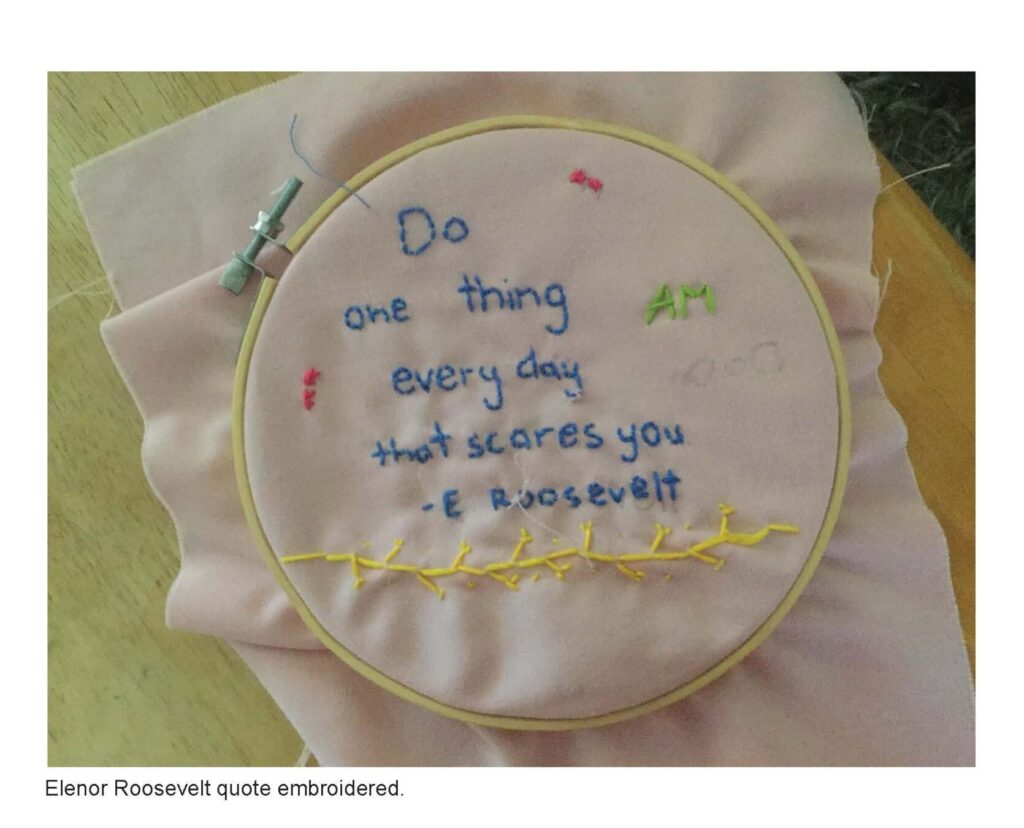


 Stefania Druga is the creator of Cognimates, platform for AI education for families and a Ph.D candidate at the University of Washington. Her research on AI education started during her master in Personal Robots Group at MIT Media Lab. Currently, she is also a Weizenbaum research fellow in the Critical AI Lab and an assistant professor at NYU ITP and RISD, teaching graduate students how to hack smart toys for AI education. She co-founded Hackidemia, a global community for maker education present in 40 countries, Afrimakers, initiative for learning by solving global challenges in 10 African countries and MakerCamp , global camps for learning how to build and run maker spaces. During her research in the past two years, she has observed in longitudinal studies how 450 children from 7 countries are growing up with AI and how they can acquire AI literacy concepts through creative learning activities with the open source AI coding platform she has created.