Maker research: instruments for efficacy and visual spatial skills

Shaunna Smith, Ed.D. is an Assistant Professor of Educational Technology at Texas State University who I met at the Maker Ed Summit in Arizona last fall. She has been facilitating art + math makercamps for middle school girls with a focus on impacts to their efficacy and visual spatial skills. They use the Revised Purdue Spatial Visualization Tests: Visualization of Rotations (Revised PSVT:R), which can be viewed here (she had to email them directly to request a free copy from the author).

Shaunna reports, “When we used this as a pre/post-test with our participants we found an increase from 7.6 to 9.2” which seems significant. They also used a self-efficacy test designed by Usher & Pajares (2009) for middle school aged students. The final study will be out soon.

These instruments might be helpful for people who are looking for instruments for students.

My Visit to the ‘Iolani School

Aloha! During Spring Break I spent one week visiting The ‘Iolani School, a K-12 private school with over 1800 students in Honolulu, Hawaii. I was fortunate to be invited by their Head of School, Dr. Timothy Cottrell, to attend some classes, teach a few workshops, and meet with his talented technology team.

This school has an impressive technology program that supports their motto, “One Team”, which expresses the spirit of unselfish cooperation and mutual support among the entire school community. In this post, I want to share a little bit of what I saw and learned during my visit.

The Sullivan Center

The school recently opened the doors to The Sullivan Center for Innovation and Leadership, “a sustainably-designed 40,000 square foot, four-story facility dedicated to citizenship, applied technology, scientific discovery, and digital communication. Focusing on 21st century learning skills, the Center includes a fabrication lab, flexible project spaces, collaboration classrooms, a digital media lab, a rooftop garden, and a research lab.”

‘Iolani is eager to share their successes and challenges in designing and building this facility. They have an open door policy and host visitors from around the world. They are committed to sharing this center with their community and often host workshops and conferences for other local schools.

The Innovation Lab

Garage doors on the bottom floor of the Sullivan Center open up into their Innovation Lab, a world-class fabrication shop. They have all the standard fab lab tools including two large laser cutters, wood and metal shop tools, electronics prototyping tools, and even a water jet cutter.

This machine can slice through up to 12 inches of wood, plastic, marble, copper, glass, or steel! This giant chess set was cut out on the water jet.

The robotics team custom makes their own parts. While I was visiting, this team was on the Big Island, testing a lunar dust shield system at Mauna Kea volcano.

Another robotics project was initiated by a biology teacher and some students who built this remote control aquatic research vessel that samples water from a polluted canal that passes by the school.

The Professional Development Workshops

Iolani is dedicated to public-private partnership. While I was visiting, the public schools were on break. Iolani opened my workshops to teachers from all over the state for free, so the majority of the participants were from public schools.

I taught a workshop on basic circuits with copper tape and LEDs. They made interactive quiz boards that light up when the correct sensors are connected.

I taught a very brief introduction to collecting sensor data with the RedBoard from Sparkfun. It was a one hour workshop so the participants completed some of the basic Arduino examples.

I also taught two MaKeyMaKey and Scratch workshops, one on interactive storytelling and another on digital music instruments.

Attending Classes

In between the workshops, I had the pleasure to attend a few of the technology elective classes at the school. I sat in on Robotics, Robotics 2, Make It 101, Video Game Design, and Electronics.

The electives are small classes of 6-10 students. Iolani has a dedication to small classes with top-notch teachers. The team that runs their fabrication lab includes artists, designers, physicists, and electrical and mechanical engineers – bringing the real world into the classroom. While the technology facilities are world-class, it is clearly the teachers and the students that really make this program so special.

“Doc” Inouye is a longtime physics teacher at the school. He taught himself physical computing to start teaching a class called Make 101. In this Upper School class, students work in small teams on all sorts of creative technology projects. While I was there his students demonstrated a motorized bubble blower, a model of a garage door opener, and an alarm clock inside a 3D printed motorcycle helmet. All of the projects in this class were inventive and unique, quintessential maker-type projects.

Doc also teaches Robotics, a middle school class where the students learn to build robots using the Arduino microcontroller, Vex Robotics parts, and a custom add-on shield that was designed in-house.

Martin Emde, the shield designer, was an Electrical Systems Engineer at Boeing before becoming a math, physics, and now an engineering teacher. His students in Robotics 2 were custom designing and building their own quadcopters. They designed the frames in Solid Works and then laser cut the parts. I was amazed that all of the quadcopters had such different designs. These were not cookie-cutter projects. They were almost ready for testing while I was there.

Martin’s middle school electronics class was learning about logic gates during my visit. It was a bit shocking to watch 7th and 8th grade students pick up the concepts of NAND, NOR, XOR, etc so quickly. They were really engaged with the lesson.

The Video Game Design teacher is Gabe Yanagihara, an artist and educator who has worked on popular video games and museum exhibits. His Middle school students were designing scrolling games in Scratch. Gabe loves to share his passion for video games with his students by deconstructing and recreating game mechanics from a Nintendo 64 system at the front of the classroom.

The classes at ‘Iolani are only 45 minutes (although this is changing next year), but they meet every day, and the students are able to pick up their projects quickly and make progress each period. The students were justifiably proud to share their projects with me. I really enjoyed visiting these classes and meeting the teachers and students.

The #iolanihackers

As I was wandering their school, I noticed many intricately designed and beautifully painted light up displays.

I learned that a group of students who call themselves the #iolanihackers made these displays for various events.

Led by a female freshman, they are “a small anonymous group that pulls pranks on the school to make people smile. It’s based on the MIT hacks, where ethical, clean pranks would be pulled to create a quirky aspect of the school.”

They also design and build detailed interactive installations around the school. The elevator in the Sullivan Center serves as a constantly changing showpiece of their increasingly sophisticated skills. Check out this gallery of images from some of their past elevator installations. https://www.behance.net/gallery/20268357/Iolani-Hackers

While I was visiting, the elevator had been transformed into a tribute to the Beatles. When you walked into the elevator, Beatles songs would start playing, Abbey Road was projected onto the floor, the buttons were transformed into the controls for a Yellow Submarine, and there was a back-lit silhouette of the Fab Four jumping in the air.

The #iolanihackers even completely redesigned the faculty lounge at the school.

I highly recommend watching this short video documentation of the design and installation.

Third Grade Workshops

One of the highlights of my visit came on the final day, when I taught two workshops for 66 third grade students. Hosted by Lower School technology teacher, Matt Dillon in his Lower School Fab Lab, each student made their own “Gami-bot”, a small robot made by folding a business card. I made a larger template for the kids to make it easier for them to fold. The students were really excited to get started after an introduction to the activity. We gave each student a print out of the instructions. There were a lot of peers helping peers as they folded their robots and added vibrating motors and batteries. When they were done, we let them play with their creations before we had two excellent wrap-up discussions about following instructions and how they might make improvements to their robots.

Conversation with the Head of School

At one point during the week, I sat down for a few minutes to chat with Head of School, Dr. Tim Cottrell, about the school and some of their successes and challenges.

He reiterated their dedication to working with the local public schools to share resources and opportunities. Their students and teachers often collaborate with the public schools on projects and events. ‘Iolani strives to serve as an example of how private and public schools can work together to make both stronger.

One interesting lesson that they learned from building the Sullivan Center was that University style common areas don’t necessarily map well to K-12 schools. Inspired by the d.school at Stanford, they included some large open spaces in the building with concrete floors and all the furniture on wheels so that they can quickly reconfigure the spaces. While I was there, these spaces were being used to display student work, host conferences, and host a Buddhist Monk who spent the week giving lectures, meditating, and building a beautiful Mandala.

However, Dr. Cottrell lamented that the students were not able to use the space as much as he would like. He noted that in a university setting, students can often set up a work area and spend the whole day there. But in K-12, the students are highly scheduled and can’t really spend several hours working in their own dedicated space.

With over 24 electives to choose from, plus award winning art and music programs, the students at ‘Iolani have a lot of options to explore their interests. Some teachers might fear that the newer technology electives will pull students away from their more established music and arts programs. I hope that they find more ways to integrate their technology resources into those other subject areas.

As an inspirational story about his future hopes for his students, Dr. Cottrell shared a project that a recent alum had gifted him.

The project was a wheel that carried metal balls up to a ramp where they rolled down and were picked up by the wheel again. 

This student is now a freshman at Olin College. He recently sent Dr. Cottrell a video of a mesmerizing engineering art project.

Dr. Cottrell noted that had this student had the opportunities and resources to explore these technologies when he was a freshman, he could have made projects like this when he was at ‘Iolani.

Indeed, I’m really looking forward to seeing the future projects by the middle school students building quadcopters, the students in Make It 101, and especially the #iolanihackers.

I have to thank the staff at ‘Iolani for their hospitality and kindness. The administration and technology team went out of their way to make me feel like a member of the ‘Iolani community. Thank you so much for everything, Karen, Mike, Jackie, and Patti!
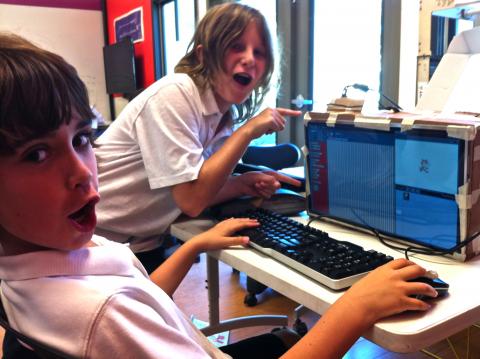
Fostering a Constructionist Learning Environment, the Qualities of a Maker-Educator

“Constructionism is not interested in pitting serious against playful, but instead finds ways to live at the intersection of the two” – Paulo Blikstein (2015)

In previous blogs I have addressed the role of co-teaching in a maker classroom, as well as the intersection of Reggio Emilia practice and working in a makerspace in hopes of redefining the role of teacher in a Constructivist learning environment. Lately, the FabLearn cohort has also been discussing the essay written by Paulo Blikstein and Marcelo Worsley, soon to be published in Project Zero’s Makeology book. In this chapter of the book, the power of the culture of making is said to be highly dependent on the pedagogical style and attitude of the teacher. Fostering a constructionist learning environment is no small charge, as it turns out. Once established, however, this environment offers a world of learning experiences that are pitted to challenge the status quo teaching and learning we see in most schools today.

So what qualities would a teacher possess in a constructionist environment and how would these superheroes behave? Thank you to FabLearn Fellows Mark Schreiber and Erin Riley for their feedback for this post. They are quoted below from our small group meeting on April 7th. Here is a list of top five qualities and behaviors to keep in your tool kit for fostering a constructionist learning environment.

Keep it Brief, Relevant and Open! Gary Stager and Sylvia Martinez have a great approach to lesson planning for Makered. Use prompts instead of teacher led and cookie cutter curriculums for best results in constructionism.  Good prompts are simple enough for kids to understand, vague enough to allow a diverse and open array of solutions, and immune to standardized testing. Prompts mirror the effect of using essential questions to deepen engagement, understanding and love of learning. Like essential questions, prompts also allow for the natural integration of math, science, technology, the fine and performing arts, social studies and language arts. In other words, relevant and real problems look like real life.

Model the Maker Mindset! Be willing to co-learn, see the use of technology as an opportunity rather than an insurmountable challenge. Gary Stager is famous for saying, “If you haven’t learned in this century, you should not be teaching in this century.” Erin Riley notes that maker spaces are not your everyday classroom environment. “The Maker Space attracts ‘those kinds of teachers’ willing to take a risk in teaching old content in a new way,” says Erin. Teachers have to be ready to throw out what simply looks like “good teaching” for more effective teaching, which will look different in different settings. It might look like a play, a concert, a cave mapping robot, a scratch video game, or…the list is endless.

Act like a Scientist! You are exploring new territory as a maker educator. Record using images, self-reflections, portfolios and any tool at your disposal to reveal how and what your students are learning. Mark Schreiber reminds us that one of our roles is, “to assess how this work is better or complementary to the current practices of our peers in their classrooms.” Do not get intimidated by testing something that has never been done. A scientist will revel in the unknown. Constructionism and making may offer a better vision of school and learning, lets prove it together by showing and sharing work.

Reward Curiosity and Passion with Rigor! Fredrick Douglas is famed for stating “Without struggle there is no Progress.” Take out progress and insert learning, and you have a recipe for what constructionism feels like. Never tell a student their ideas are too hard or above grade level. Let them discover their own natural boundaries and when they get stuck, brainstorm possible solutions with them or in a team. This concept of allowing the learner to step beyond themselves is explained in Vygotsky’s concept of Zone of Proximal Development as an essential element of learning.

Keep it Safe! Social emotional learning is a large part of what we do as educators. Fostering a safe space that values; new ideas, nontraditional uses for tools and materials, as well as taking risks to solve hard problems, is working against the ineviatalb consequences of more traditional systems of teaching and learning. What does keeping it safe look like in real terms? According to Constructivism: Tools to build (and think) with, “Creating a safe space for students to learn includes a welcoming, friendly, space that is as free as possible from the pressures of time.” Time to be creative is what kids need; show your value for this skill by devoting time to foster it. Lastly, a safe environment is one in which students participate in their own assessment, allowing them to see its value and to gain literacy and autonomy through it. Judgement slips away in the face of critical feedback allowing the sharing  of ideas to be a rewarding part of their learning journey.

Have fun practicing the above and share your thoughts on what you would add to the list!


Resources to Learn More:

Situating Constructionism by Seymour Papert and Idit Harel.

The Nature of Constructionist Learning, a special topics course outline with various reading resources.

Invent to Learn Chapter Two: Learning by Gary Stager and Sylvia Martinez, and its Resources.

Falbel, A. (1993). Constructionism: Tools to build (and think) with. Toronto: LEGO DACTA.

Learning by Making: An Introduction to Constructionism https://www.youtube.com/watch?v=DCSMvGB-sVA

FabLab and Its Learning Dynamic (Part 2)

Part 2: People and Relationship as Learning Assets in FabLab

(Thank you again to Ms. Angi Chau and Ms.Heather Pang for having me to visit and observe your wonderful work at
Bourn Idea Lab at Castilleja School.)

Looking closely, the physical objects and setting of both the BI Lab or the soap carving classroom is just a part of the “Learning Richness” components. Besides having the objects in the classroom communicate messages and knowledge to the students, which allowed self-directed learning to occur effectively, this paper will probe more deeply into the learning that was embedded in the “human interactions” in this environment.

“Community of practice”: create expert agencies. Besides “making” concrete objects as a meaningful personal learning and expression, many studies in the field of Constructionism also emphasize the analysis of the “social and cultural context” ((Cavallo, 2000), (Sipitakiat, 2000)) underneath the Learning Atmosphere (Blikstein, 2002).

We introduced the concept of “Learning Atmosphere” in earlier work (Blikstein, 2002), which might be a model to further help the design and understanding of novel learning experiences using technology. Our approach considers several aspects, such as choice of what to build, which tools to use, affective relationships and hidden cultures/agendas as part of an indivisible whole (the atmosphere) in which the learning experience takes place. (Blikstein and Cavallo, 2003, p.1)

The learning interactions in FabLab are very dynamic and have their own pace and timing. Multiple levels of conversations occurred in the class, as well as different interpretations of messages. The notion of micro levels of complexity in this “making” environment resonates with the model of “apprentice’s learning” (Lave and Wenger, 1991). The students moved freely and talked to peer students and tried to solve problems together although they were unclear about each one’s status of expertise. The multi-directional messages from expert to novice, from novice to old timer, and the dialogue between novices and more experienced students, or “little old timers” can be powerful learning resources as well as creating a chaotic environment.


Figure 1. Maker Scout Progress Board and A Maker Scout in the Maker’s Club.


Ms. Angi Chau, the BI Lab Consultant, has made an effort to build a program that helps disseminate the “correct practice” to the student agents. The Maker’s Scout Program intentionally built up the effective learning agents in the classroom for the longer term. As an expert, Ms. Chau has modeled sharing and giving advice to two other teachers who are “little old timers” (Lave and Wenger, 1991) compared to some novice students. Some old timer students were trained by experts and played the role of experts and shared the practice with the new- comers as requested.

Compare this to the other similar lab observation, where the Lab manager was overwhelmed by a lot of students and the lab was not organized in a way that would facilitate self-directed learning, and all students had to rely on one teacher. Such centralized interaction led to the inefficient flow of action in the classroom. Students asked each other instead of waiting for the “expert.” The shallow explanations that were given were spread throughout the class and misinterpretations occurred. (This later backfired on the teacher who had to come back to solve all the problems that occurred from those misinterpretations.)

As Lave and Wenger (1991) said, “the effectiveness of the circulation of information among peers” is the “condition for the effectiveness of learning”.  Dissemination of the practice is one of the key success factors of this learning environment. A good learning environment does not just happen because of a perfect physical setting. It requires the understanding of the new learning interactions between people in the environment and so it must be designed in such a way that the messages will be conveyed throughout the classroom effectively and correctly.

End of part 2.

FabLab and Its Learning Dynamic (Part 1)

I have been observing and stydying about “FabLab” idea by tracing back to its original ideas, practices
and theories behind this new leanring interactions. I observed the FabLabs, Maker’s Labs and some independent labs in the past few years and had done some interviews with teachers, lab manager, lab director who run the labs.  I wrote a paper recently for a course that I took about understanding learning environment which I think this paper might be userful for the teacher makers who are interested to understand the root of “making” in schools in the lens and practice of Constructionism (Papert, 1980).

I separated this paper into 5 small parts to make it not too heavy to read and digest. This paper will focus mainly in the interactions
between teachers and students in class in terms of the new attitudes and point of view to effectively deliver the learning development
in this environment.

Part 1: From 3D Printer, Traced Back to “Soap-Sculpture” 

In the last paper, I analyzed the way that BI Lab has done an excellent job in decentralized learning by using physical settings and objects in the lab to support student-centered learning. The idea that making the lab a space to “talk” for the students has projected its clear success as evidenced by a sixth grade girl who worked intensively by herself in the lab for a solid forty-five minutes with few interactions with teachers. All students in this class of fourteen students of mixed age from ten to fourteen years , mingled with each other and were highly focused on working on their individual projects alone and together.

This learning situation resonates with the learning environment of the “soap-sculpture” class, described by Harel and Papert in their book, Situating Constructionism. (Harel and Papert, 1991) Instead of soap carving, the students, in 2015, are making a variety of inventions with electronics, computer graphic design, 3D printers and so on. FabLab@School was originally designed based on the philosophy of Constructionism (Papert, 1980). The lab was designed to support student-centered learning and provide a variety of technology tools for young students to express and explore their ideas. Papert and Harel mentioned the “soap- sculpture” classroom atmosphere that modeled Papert’s idea to create a learning environment where a continuous “learning-richness” for mathematics and science can take place. FabLab with its new technology devices put students in a space where they can interact with mathematics and science in a concrete manner:

                      In this particular art class they were all carving soap, but what each student carved came from wherever fancy is bred and the                  project was not done and dropped but continued for many weeks. It allowed time to think, to dream, to gaze, to get a new idea and try it              and drop it or persist, time to talk, to see other people’s work and their reaction to yours—not unlike mathematics as it is for the                        mathematician, but quite unlike math as it is in junior high school.  (p.4)

We can see that in the “soap-sculpture” classroom’s “richness”, besides the physical setting and objects in the environment, it takes timing, freedom, space and interactions into account. Unlike the conventional classroom that is usually based on one-way communication, the learning dynamic of the “making” classroom consists of complex conversations and interactions, which this paper will discuss further.

End of part 1.

(If you are interested in the full paper, 9 pages, please feel free to let me know.)

The Culture of Making – FabLearn Fellows March 2015 Blogs

The 2014/2015 FabLearn Fellows cohort is a diverse group of 18 educators and makers. They represent eight states and five countries, and work with a wide range of ages at schools, museums, universities and non-profits. Throughout the course of the year, they will develop curriculum and resources, as well as contribute to current research projects. Their blogs represent their diverse experience and interests in creating better educational opportunities for all.

March 2015 Blog Highlights

What can these scraps reveal? by Erin Riley

“Process can be informed by what is available and as a result unfolds in different ways.” Erin explores how creativity and constraints work together as students use upcycled and recycled materials in projects.

STEAM, STEM, and Making by Tracy Rudzitis

Can the momentum of excitement about making, the new push for STEM education, and the acknowledgment that arts should play a role in STEM subjects be captured into real school change? Or will the enthusiasm, as Tracy asks, simply be redirected into minor tweaks to the status quo, lectures, and tests, because teachers and administrators simply believe that is the only way to teach. The key, Tracy says, is to understand the rich pedagogical history in which these new practices are situated.


Make your silicone protector for soldering irons by Gilson Domingues and Pietro Domingues

Soldering is the best way to connect electrical components, yet the iron is very hot and poses a danger, especially to children who have smaller hands and have trouble holding the iron so far away from the working tip. This do-it-yourself soldering iron protector is both fun and useful!


Teaching rights by Erin Riley 

Erin shares her version of a punchcard system that designates students who are trained users and teachers for various equipment. “When students teach they: solidify their own learning, share their knowledge with peers, and gain confidence.  When the teaching pool widens to include students, the heirarchy breaks down and our makerspaces become a place for students, including us.”

From Name Tags to Lasting Artifacts; Fostering a Culture of Deep Projects by Christa Flores

Christa asks, “…are schools that are pushing design into their programs allowing students to know more than the terms of design (brainstorm, iterate and empathy) or are they truly teaching the value, and intricacy of the design process?” To answer this, she offers examples of deep learning through design and the complex mix of culture, leadership, and support for the process that is needed for success.

Plus – Useful research on museum/ out of school programs

Research to Practice: Observing Learning in Tinkering Activities (Museum) – The Exploratorium Museum shares a useful framework for researchers, practitioners, funders, and policy-makers seek to understand what constitutes learning-through-tinkering, particularly in a museum setting. Supported by video case studies of the tinkering activities in the Tinkering Studio, they developed four Dimensions of Learning and three broad Facilitation Moves. In addition, they created a Tinkering Library of Exemplars that categorizes over one hundred video clips according to these frameworks.
Paper in Museum Journal http://onlinelibrary.wiley.com/doi/10.1111/cura.2015.58.issue-2/issuetoc

Frameworks http://tinkering.exploratorium.edu/dimensions-of-learning

Video Exemplars http://tinkering.exploratorium.edu/learning-and-facilitation-framework


Museum-managed STEM Programs – What evidence is there for the impact of museum (and other designed setting) managed programs on STEM learning and interest? What is known about the impact and value of such programs on school-age children’s understanding of STEM concepts and practices as well as their interest and engagement in STEM? By Bernadette Chi, Rena Dorph & Leah Reisman, Lawrence Hall of Science, UC Berkeley

Evidence & Impact: Museum-Managed STEM Programs in Out-of- School Settings (PDF)

Compiled by Sylvia Martinez, FabLearn Fellow Mentor

Earth Day- Free Upcycling Curriculum

Earth Day 2015 is coming so celebrate it by having your students upcycle!  And to help you out, I’m giving you a free upcycling curriculum.
Here are the 4 easy steps:

  1. Download the free Design Case Curriculum PDFs using this link. (I’m making this opensource under the creative commons now so feel free to pass it along) and unzip it.  (see quick start below)
  2. Go to your local bike shop, climbing wall, upholstery shop, etc. and ask for some of their hard-to-recycle items like rubber tubs, old ropes, discarded fabric, corks, burlap, etc.
  3. Use the activities in the Design Case Curriculum to help your students create a new upcycled product.
  4. Post comments, pictures, or ideas below or on the Design Case Pintrest board.

Have a great Earth Day, if you have any questions feel free to use the comment section below.

Since the curriculum was meant to come with a box of sample materials here is a little quick start guide to help you get going:

  • You’ll find 7 .pdfs labeled ATeacher_Sections, and then BTopic1, CTopic2 and so on.  Start with A and work your way through.
  • The student sheets to help guide them through the activity can be found in Topic 1, 2, 3 and 4.
    • Some items will require extra work since this is only the written part of the Design Case Curriculum.  If you have any questions feel free to ask in the comments below.
  • You will find a student sheet 2-6 that has a set of activity cards. The original curriculum shipped out with pre-printed cards with pictures of various materials, activities, and locations.  The idea is to have your students brainstorm on random combinations of the cards.
    • I would suggest having your students create their own cards, put them all in piles and have groups blindly draw 1 location, 1 material, and 1 action card to brainstorm on.
    • If you would rather have your own set of printed cards let me know and I can try to send you the files so that you may print them.
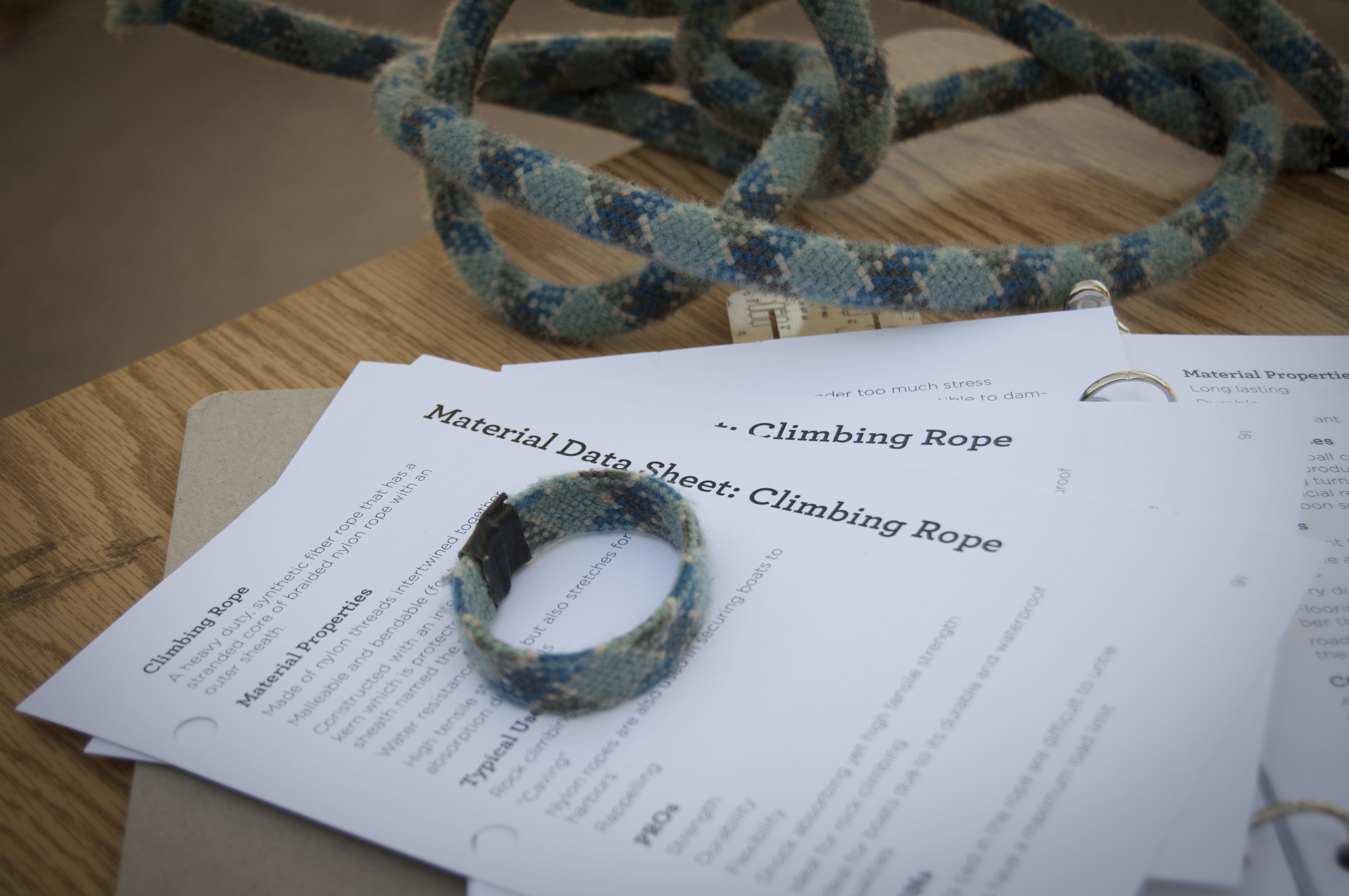
  • There is 1 sample Material Data Sheet for your viewing.  I find it very helpful for students to do a little research on each of their materials and collect stats on them.  What is vulcanized rubber? How much is thrown away?  Why?  What are the properties of these various materials?
    • Here are some ideas for material research: Bike tires, wetsuits, astro turf, cork, constructions waste, e-waste, burlap, textile waste, climbing ropes, conveyor belts, circuit boards, fire hose, CDs and other obsolete media.

I hope you all enjoy this free upcycling and design curriculum!


Design Case Curriculum by Mark Schreiber is licensed under a Creative Commons Attribution-NonCommercial 4.0 International License.
Permissions beyond the scope of this license may be available at www.designcase.co.

Documenting, connecting big ideas, and sharing – what makes “making” work

The 2014/2015 FabLearn Fellows cohort is a diverse group of 18 educators and makers. They represent eight states and five countries, and work with a wide range of ages at schools, museums, universities and non-profits. Throughout the course of the year, they will develop curriculum and resources, as well as contribute to current research projects. Their blogs represent their diverse experience and interests in creating better educational oportunities for all.

February 2015 blog highlights:

Documenting a project using a “failures box” – by Susanna Tesconi

Susanna writes about using a “failures box” not only as a way to keep iterations and prototypes of student work, but also as a support for documentation and reflection. Seeing these artifacts as chapters in a story, rather than trash creates an expectation that failure is part of the forward progress, not something shameful.


Making and the Reggio Emilia Approach: Making the Connection by Jaime Bartels via Christa Flores

In this guest post, Jaime responds to his participation in a workshop exploring connections between the Reggio Emilia movement and “making” in the classroom, and his reactions to a visit to the “Wonder of Learning” exhibition of Reggio Emilia work now showing in Brooklyn, NY. Jaime makes connections between the “..the role of teacher in a maker space and that of the traditional pedagogista and atelierista of the Reggio Emila philosophy of education.” He makes the case as well that “..the environment must exist in a didactic role, as a teacher itself,” and explores how the Montessori teaching philosophy of “teacher as observer” relates as well. http://fablearn.stanford.edu/fellows/blog/making-and-reggio-emilia-approach-making-connection


Overview – Lighthouse Creativity Lab by Aaron Vanderwerff

A common question is “how does making in the classroom work in real schools?” Towards this, Aaron contributes a useful overview of the Lighthouse Creativity Lab, a public charter school that embeds making into a standards based curriculum (Common Core and Next Generation Science).


Make the space speak to the kids: Experience from a visit at Bourn Idea Lab by Nalin Tutiyaphuengprasert

Nailin shares her observations from a visit to the Bourn Idea Lab at Castilleja School in Palo Alto. She documents her thoughts about the learning dynamics, thoughtful planning, and culture she witnessed. She concludes that there were “3 Ps” that stood out: people, platform, and process.


Global Space Balloon – Engaging Kids in Something Big by Mark Schreiber

Pics in Space! is the team name for Frontier Acadamy’s Global Space Balloon Challenge entry. The balloon will travel to near-space, taking photos of the earth and sky with contributed photos at the center of the action! Mark shares his project management tips for keeping a large project like this on track while still maintaining a student-driven, student-centered approach.

Research to Practice: Observing Learning in Tinkering Activities (Museum)

Unfortunately this is behind a paywall… it would be great to know what these frameworks are!

Update – March 30

Research to Practice: Observing Learning in Tinkering Activities (Museum)

Authors: Joshua Gutwill is Director of Visitor Research and Evaluation at the Exploratorium,San Francisco. Nina Hido is Senior Project Evaluator, Exploratorium. Lisa Sindorf is Research Associate, Exploratorium.

Curator: The Museum Journal,  Vol 58 Issue 2, April 2015

Article first published online: 20 MAR 2015 – http://onlinelibrary.wiley.com/doi/10.1111/cura.2015.58.issue-2/issuetoc

Abstract: As tinkering and making spaces proliferate in museums, many researchers, practitioners, funders, and policy-makers seek to understand what constitutes learning-through-tinkering. To support discussion of tinkering-based learning, the Exploratorium sought to articulate and refine a valid, evidence-based definition of learning in its permanent on-floor Tinkering Studio. We studied and made videos of fifty learners and their companions in one of three tinkering activities in the Tinkering Studio. A team of researchers and practitioners used the videos to refine frameworks for learning and facilitation (initially developed in a prior project), leading to the identification of four Dimensions of Learning and three broad Facilitation Moves. We created a Tinkering Library of Exemplars that categorizes over one hundred video clips according to these frameworks. The Library may help articulate important aspects of learning and facilitation, give voice to practitioners’ values in defining learning-through-tinkering, and lay a methodological foundation for gathering evidence for such learning.

From Name Tags to Lasting Artifacts; Fostering a Culture of Deep Projects

Introduction

Much hype has been made about incorporating Design or Design Thinking into education, but what is design and why is it “suddenly” a valued 21st century concept in education? Anyone who has taken a Design Thinking workshop knows that little is gained from a one hour design cycle, especially those based on product development that may or may not be a sustainable use of resources. On the other hand, understanding the actual process of design through first hand practice requires time, a lot of time. Years in some cases. That being the case, are schools that are pushing design into their programs allowing students to know more than the terms of design (brainstorm, iterate and empathy) or are they truly teaching the value, and intricacy of the design process? Inspired by Paulo Blikstein’s contribution to Agency by Design’s Makeology book (in press), I am writing this blog on the importance of “fostering a culture of deep projects” as it relates to the work that I do in science with my 5th graders.

The Design Process, Design Thinking or Design Science

Anyone can wikipedia Design Thinking to discover the term is rooted in the product design industry which grew out of Stanford’s d.school. David Kelly, one of Design Thinking’s co-fathers is a revolutionary thinker; his “human-centered” approach to design is more than colorful post-it notes and white board doodles. Design Thinking is based on an older idea referred to as Design Science or The Sciences of The Artificial.

“The central task of a natural science,” according to Simon Herbert author of the book The Sciences of the Artificial (1969), “is to make the world commonplace, to show that complexity, correctly viewed, is only a mask for simplicity; to find pattern hidden in chaos.” If the sciences of the natural sought to make the wonderful “not incomprehensible,” Herbert describes the “artificial” as any artifact created by man. Design Thinking then, evolved from a perspective that to Design, was an attempt to use the thinking routines of the natural sciences to inform how to construct artificial means for humans to interface with the world. Using a glass to drink water, rather than a cupped palm. With the addition of the concept of empathy, Design Thinking claimed to be more than a mindless march to mass produce. The user centered approach led to better products, better left up to the user to define, of course.

In a book entitled How Designers Think: The Design Process Demystified, architect and design researcher Bryan Lawson argues that applying the design process is a skill of the mind, akin to riding a bike, or playing an instrument. His research suggests that thinking like a designer can compliment thinking like a scientist, when it comes to problem solving with constraints.

For Kenya Hara author of Designing Design, “There are an unlimited number of ways of thinking and perceiving. In my understanding, to design is to intentionally apply to ordinary objects, phenomena and communication the essence of these innumerable ways of thinking and perceiving.”  Design in this sense, is a mindset, a lens through which you can see the infinite layers of detail in the world.

The Design Process allows the designer to apply the knowledge from the natural sciences to a creative science. The creation of the artificial, whether it be room temperature, a modernist chair or a school system is solution finding, armed with scientific knowledge; with or without a strong focus on the user. Placing the user at the center of why we make things brings to the engineering process a story. Stories create connections and allow students to empathize; and in turn gain diverse perspectives of the world they live in.

Making for Change; the Value of Design in School

I recently visited the East Bay School for Boys and got a huge crush on their metal arts program. At this five year young, agile, middle school serving under 100 students, I saw projects that allow boys to identify with their culture and their emotional and physical selves (they have capoeira class, beekeeping, they made a half-pipe skate ramp and make their own steel knives). I also saw projects that get boys to work with local homeless residents and projects where boys gain empowerment through capstones based on a super hero theme for social justice. Kyle Metzner and David Clifford are the creative minds behind the EBSB design thinking program. Kyle comes from a professional background in design and fabrication and David has a fellowship at the Stanford d.school where he is part of a cohort of individuals “working in a variety of ways to invent, disrupt and innovate in and around complex social systems.” The value of teaching the design process, claims Metzner is that “you can not hand hold a student through the design process.” Design is the ultimate test of creativity and willingness to iterate, he explains.

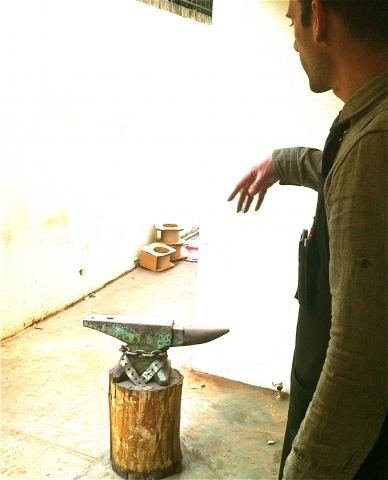
Kyle explains their blacksmithing curriculum and how it has informed their students in areas ranging from conscientious consumption, molecular structure to ancient cultures.

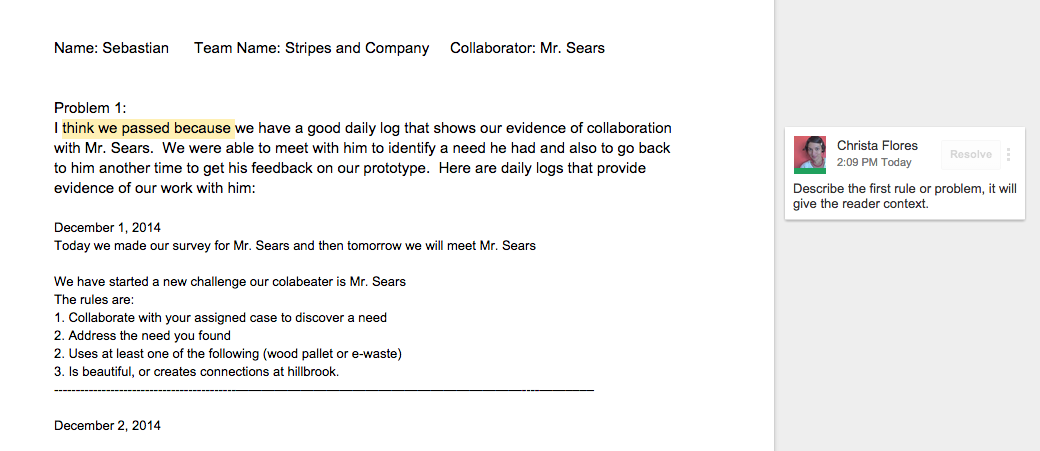
In problem based science level 5 at Hillbrook, we are in the midst of a six month long design project that we affectionately refer to as the “spring hard problem.” For this year’s challenge my 10 and 11 year old students have to follow four simple rules or prompts. In May, they will grade themselves on the design and engineering process by arguing for a pass or fail grade. This construction of an argument, as well as a detailed log of skills and topics employed to solve problems, is another avenue for practicing the design process.

We use Google docs when working on process, as they offer students easily accessible tools for self-publishing, as well as a quick and permanent means for me to give students feedback. We use terms such as craftsmanship when working with words or wood.


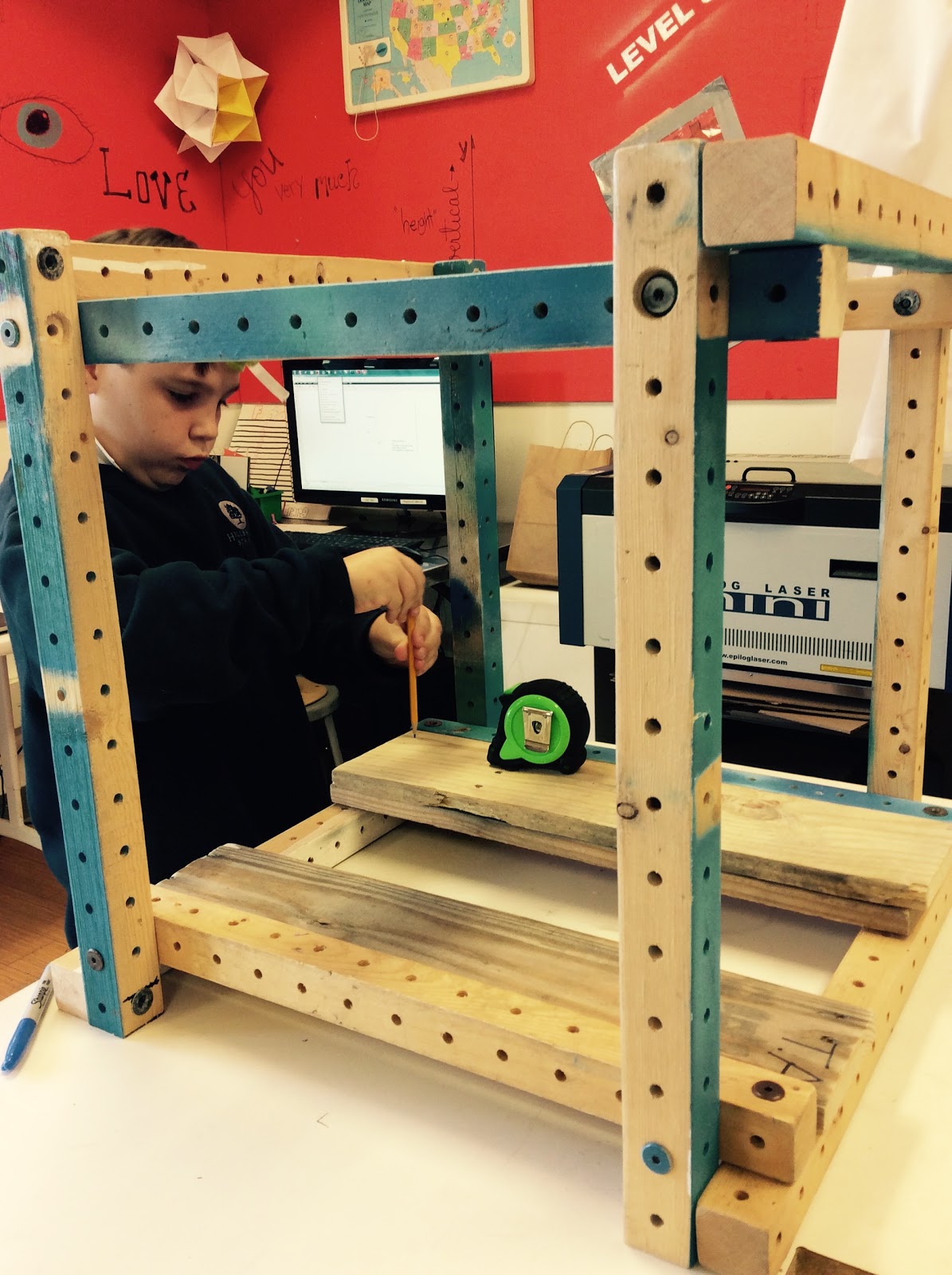
Measure twice, cut…well it depends. The iterative process almost never follows a straight line.

When my students invent, they take ownership over an idea, then face real world problems on their route to making their idea come to life. At the middle school level the design process is a creative exploration of hard, yet fun, problems (rigor + risk + reward), positive identity formation (I am creative, I am a scientist, I can solve problems) and collaborative learning that questions the status quo. Add responsible resource management and exposure to social justice issues, and design becomes a thinking tool for empowerment and stewardship. These are a few reasons why we incorporate the design process into the sciences at Hillbrook. What do you see your students gaining from the design process at your schools?


Small successes, for big solutions. This young lady is endeavouring to build a 60+ light display using a single wall outlet plug with a 12 volt output from our e-waste pile.

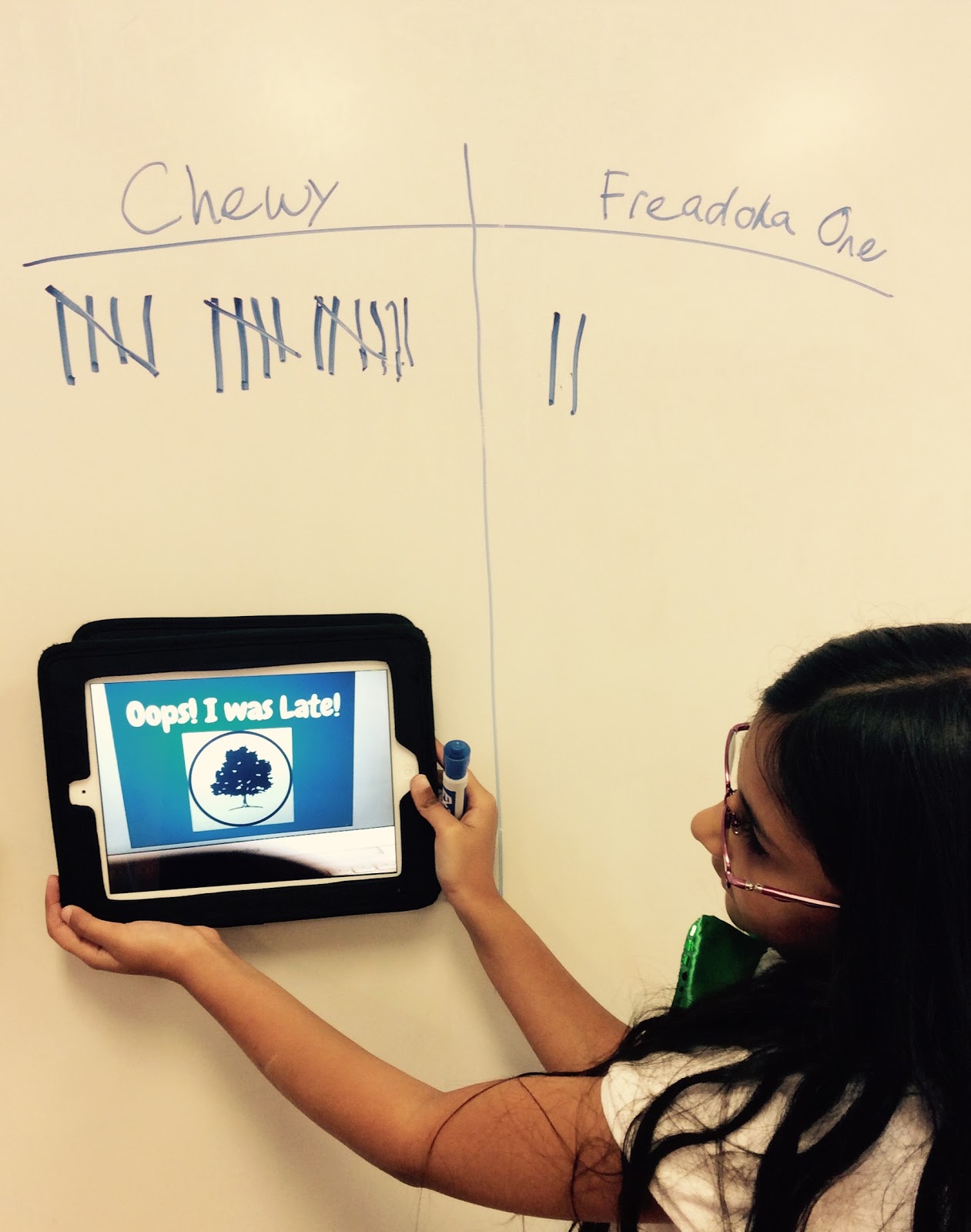
Science through survey for peer feedback. This was the winning font for the re-design of the Hillbrook Late Pass. We decide as a community what quality and beauty are.


Works Cited


  1. Blikstein, P. & Worsley, M. (2015). Why the maker movement carries the seeds of its own failure, and how to avoid it. In Halverson, E., Peppler, K., and Kafai, Y. (Eds.). Makeology. Routledge.
  2. Hara Kenya. (2011). Designing Design. Lars Muller Publishers
  3. Simon, Herbert (1969). The Sciences of the Artificial. The MIT Press
  4. Lawson, Bryan (1997). How Designers Think: The Design Process Demystified. Oxford: Architectural
  5. Martinez, Sylvia Libow., and Gary Stager (2013). Invent to Learn: Making, Tinkering, and Engineering in the Classroom. Torrance, CA: Constructing Modern Knowledge, 2013