FabLearn Fellows Blogs – Maker Teachers Make It Work

The 2014/2015 FabLearn Fellows cohort is a diverse group of 18 educators and makers. They represent eight states and five countries, and work with a wide range of ages at schools, museums, universities and non-profits. Throughout the course of the year, they will develop curriculum and resources, as well as contribute to current research projects. Their blogs represent their diverse experience and interests in creating better educational opportunities for all.

January in the FabLearn Fellows blogs saw a wide variety of philosophical and practical ideas. As “making” in the classroom becomes more mainstream, it’s important to think about the role of the teacher/leader in creative, hands-on classrooms and educational spaces. In these posts, we can see that teachers are planners, observers, catalysts, researchers, yearners, gurus, thinkers, and yes – makers! It’s such a colorful palette of roles when compared to the perception of the teacher as a content delivery system and classroom manager.

Just in Time Teacher Learning by Heather Pang – “The bigger take-away for me, as I help students with their projects is that I don’t need to know how to do everything before we start, and I will learn a great deal as we go.  And so will the students.”

“Technological Disobedience” in Cuba and informal making education by Susan Klimczak – This video on “Technological Disobedience” in Cuba complements recent FabLearn Fellows conversations about decentering making, makers, and maker education.

Making Code Real – Keith Ostfeld, a FabLearn Fellow in a museum, thinks about how coding works in his informal education context.

“Making” in California K-12 Education: A brief state of affairs – David Malpica explores the current state of maker education in public K-12 education in California. Looking at funding, standards, and support organizations creates a fuller picture of the myriad pieces of the puzzle that make up public education policy in these areas.

“Why I am not a Maker” by Debbie Chachra: Toward problematizing what it means to be a “Maker” – Susan Klimczak shares an article questioning the identity of “maker” as celebrating only those who make things, and whether that devalues people who have interests and jobs without tangible products. She connects this to the contributions of Dr. Nettrice Gaskins and Dr. Leah Buechley in questioning Silicon Valley’s interest in “making” as a generator of innovative products.

Rwanda maker interest – I shared a post by a friend traveling in Rwanda about the potential for makerspaces there. The comments, both online and off, connected several of the Africa-based FabLearn Fellows with her with suggestions, contacts, and resources. It’s a small world after all!

The Role & Rigor of Self-Assessment in MakerEd In this three part post, Christa Flores discusses various assessment techniques with the student at the center that work with PBL and maker programs.

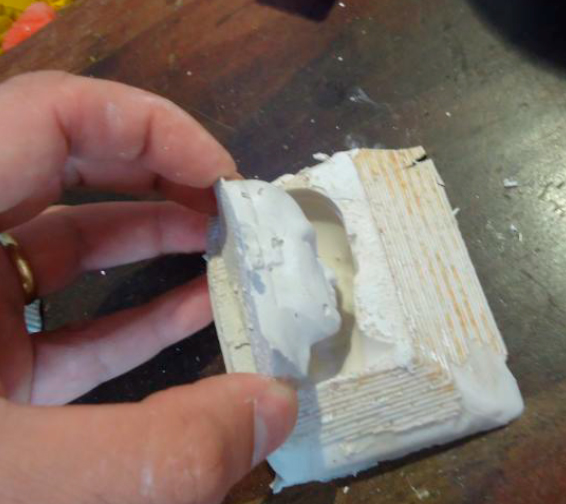
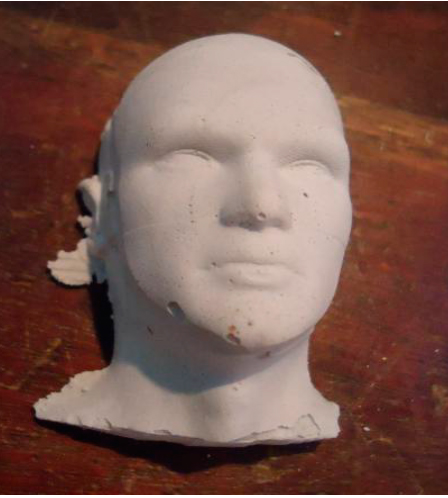
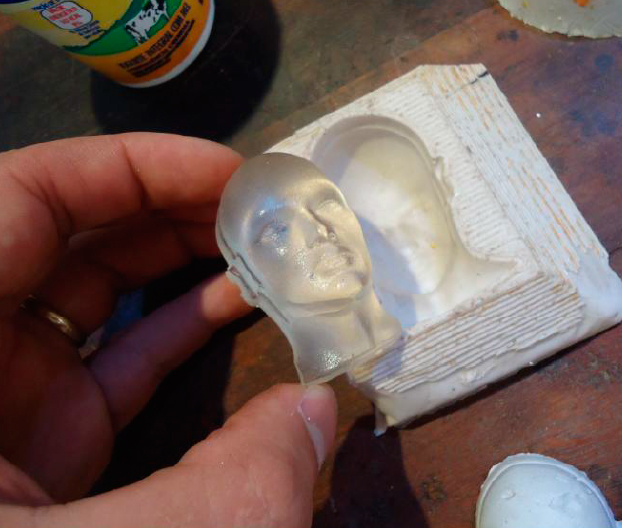
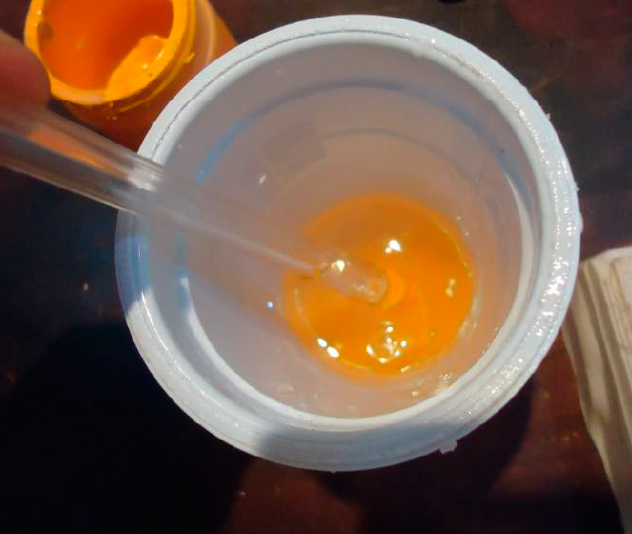
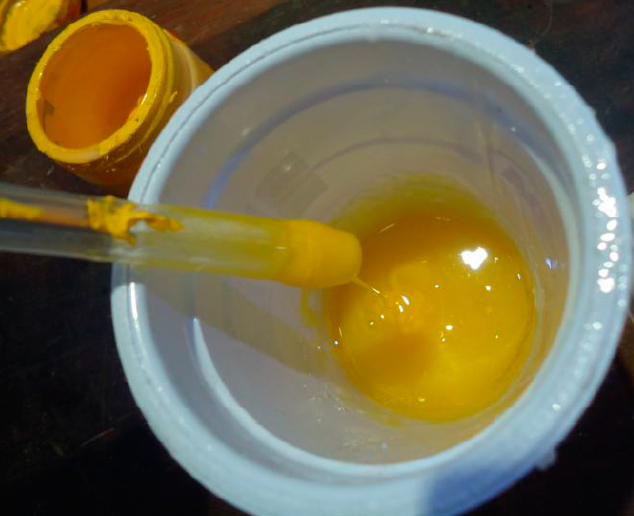
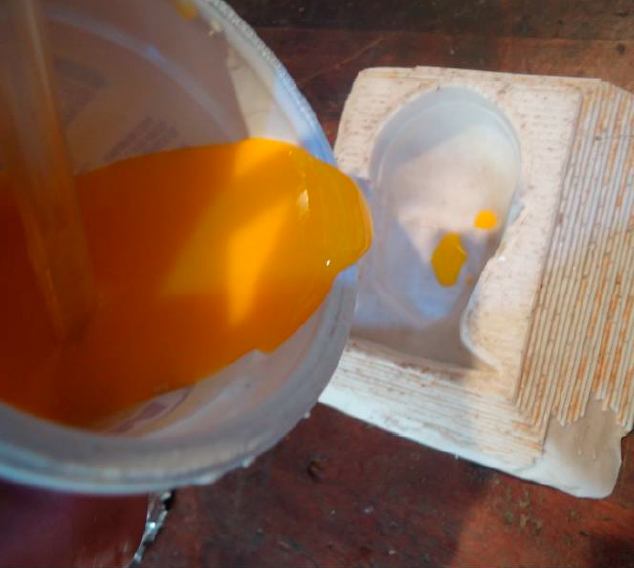
Molds and Molding by Gilson Domingues with Pietro Domingues. These three practical posts offer reasons and instructions on making and using molds to reproduce small objects with detail and precision.

Collaborative work in the classroom with etherpad Mario Parade explains how to use an open source software tool called Etherpad for students and teachers to collaborate and document work.

Intel MakeHers Report: Engaging Girls and Women in Technology through Making, Creating, and Inventing – Juliet Wanyiri shares a new report on girls and making.

Hey Kids – Follow the Directions! – Aaron Vanderwerff asks, does following directions mean you aren’t really making?

Toward Making Change: Beyond #BlackLivesMatter – Two posts by Susan Klimczak document a collaborative project at the South End Technology Center @ Tent City supported by the Harvard Graduate School of Education Dean’s Equity Project.

An interesting article on “Culturally responsive computing: a theory revisited” – Susan Klimczak shares an article that supports a recurring theme among the FabLearn Fellows and at the Fab Learn Conference of how to put youth of color, young women and youth living in families with low incomes at the center of the maker education movement.

Sequencing activities to support discovery – Erin Riley provides a thoughtful yet practical analysis of several activities that served to build skills all while leading to more open, exploratory projects. Is it possible to provide an environment where students can find their own way creatively, all the while gaining specific skills?

Where the circle overlaps, thinking about the “A” in STEAM by Erin Riley – “STEAM supporters believe STEM should be updated to include creativity, innovation and aesthetics. Are we thinking of this like a Venn diagram, merging form (from the artistic side) to function (from the scientific side) or an extra component to add to the mix, enhancing work in STEM?”

Stay tuned for more!

Just in Time Teacher Learning

slicedlincolncardboardOne of the things I like about letting students decide what they need to make for their projects is how much learning takes place between the moment they say “I want to make a model of the Taj Mahal to show how the architecture reflects the way Shah Jahan wanted to memorialize his wife” and the finished project.  For me, as a teacher, that is when a great deal of learning takes place.
As a historian, I am accustomed to working with students on a variety of research project on a wide variety of subjects. They are the most interesting when the students pick the topics, and I learn a great deal when they pick things I have never studied (some examples: the invention of skateboarding, the legacy of Coco Chanel, and the racial integration of high school proms).

This month I have been working with a 9th grade student making a National History Day project on the Taj Mahal, and we had plenty of questions about how to construct it large enough for the display. Slices of cardboard seemed to be the way to go, but I had never really figured out how to use 123D Make, and neither had our lab director, so we both did some digging to help the student.

Rather than help her directly with her model, however, I decided to just make my own, and then I would be able to help her if she needed it, but I would not be doing any of the work that she needed to do.

The result is my model of the statue from the Lincoln Memorial.

I still have some trouble with 123D Make, I have no idea how to fix the problem it often identifies as 0 sheets. It suggests the solution is to change the material settings, but I think it is finding problems in the .stl file, but does not articulate that.

The bigger take-away for me, as I help students with their projects is that I don’t need to know how to do everything before we start, and I will learn a great deal as we go.  And so will the students.

I don’t have photos yet of the student project, she cut the last of the pieces on the laser cutter yesterday, and she has a huge puzzle to put together this weekend. I am confident that it is going to look fantastic.

“Technological Disobedience” in Cuba and informal making education

The FabLearn Fellows have been talking a lot about decentering the history and definition of making, makers and maker education.

I ran across this video on “Technological Disobedience” in Cuba that sparked my imagination.

The description says:

In 1991, Cuba’s economy began to implode. “The Special Period in the Time of Peace” was the government’s euphemism for what was a culmination of 30 years worth of isolation. It began in the 60s, with engineers leaving Cuba for America. Ernesto Oroza, a designer and artist, studied the innovations created during this period. He found that the general population had created homespun, Frankenstein-like machines for their survival, made from everyday objects. Oroza began to collect these machines, and would later contextualize it as “art” in a movement he dubbed “Technological Disobedience.”

Here is a link to an article about the video and idea:  http://motherboard.vice.com/read/mbtv-the-technological-disobedience-of-…

He describes how people in Cuba became fearless makers and tinkerers and has collected their inventions because he feels they are artistic expressions, as well as tools for survival.

I think that we should add this story whenever we speak about the history of “making” and “maker education.” Education takes place as people work together informally to define problems in their community and find solutions. . . not just in schools, in enrichment programs or among hobbists!

Making Code Real

dashdot_ipad-c05a32301aa2000c54b3ddc213b19ec5by Keith Ostfeld
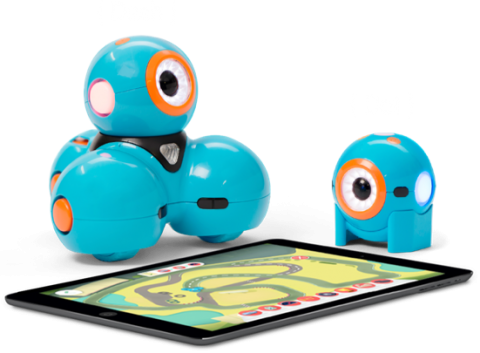
Okay, we’re not really “making code.” But, we are working to add in a coding aspect to our Invention Convention exhibition. This exhibition currently allows families to make and tinker with common objects in order to solve challenges as well as learn and apply techniques in a more focused setting in our Inventors’ Workshop and Maker Annex spaces. What we want to add is an opportunity for kids to tinker and make things happen with computer programming.

To this end, in 2013, I helped fund a Kickstarter campaign for a group called Play-i (now called Wonder Workshop) and their Bo and Yana robots that would allow kids to program them. In December 2014, I received our robots – now called Dash and Dot – and they were all I hoped they would be and more.

dash_dot_ipad-87af61118c69495c68afbb0bcffb72fe

I am very fortunate to have two prototype testers at home (my daughters, age 6 and 7 1/2), so I took home Dash (the robot that you can program to move around) and turned it over to them in order to understand how actual visitors may use it when they come up to them. I should mention that they are used to prototyping with me, where I refuse to help them or interact with them, and are used this sort of behavior from me, so they don’t take offense (although there is an understanding that I will later interact with them after I have had some initial questions answered). Also, for full disclosure, both of my girls did Hour of Code this past year (my older actually doing multiple sets of Hour of Code while my younger just did the Frozen version with my help). So, the first app they tested with Dash was the Blockly coding language.

image1

So, I sat back and watched them interact with it. They both readily recognized the similarity between Hour of Code block programming and Blockly and dove into it, with my older daughter starting off with the first program, then each taking turns writing more programs. They were so much more into this than even the Frozen Hour of code, mostly because the robot was real – they were actually writing programs that had impact on the real world.

The second app I had them test was the Go! App which provides a “remote control” for the robot. This was also popular with them, but they had to struggle/experiment with it a bit more to realize there were multiple tabs to control multiple aspects of the robot. After several minutes of remote control, they did go back to the Blockly program to try to emulate what they were doing using remote control.

image2

I can also report that the robot has some serious durability. After quietly watching the robot move around for about 15 minutes, my 80lb. black lab attacked it (playfully, but still gave it a solid knock) and it was still working! Not that I would recommend this sort of behavior on a regular basis…

img_2238_1

They have also received very good reviews in Entrepreneur and New York Times.

So, our next steps are to create an “arena” for Dash and Dot with a mounted iPad interface on the outside. Our plan is that visitors can program them to move around the arena. To help more advanced visitors, we would provide objects in the arena with which they can have the robots interact and challenges for them to try to complete. We plan to change these out regularly so repeat visitors have different interactions. I’ll keep everyone posted on our progress!

“Making” in California K-12 Education

In schools, “maker” education has been typically known for many years as hands-on project based learning (PBL). While “maker” education continues to deepen its roots in small pockets of the nation’s private education, the introduction and implementation of “making” into California public education still has a long road to go. Efforts are underway to provide access to “making” opportunities to more and more students.

Some of these efforts are underway in the bubbling California charter school movement, with the most well known and established programs running in the High Tech High network of San Diego, the LightHouse Community Charter School of Oakland, and a few of other public schools (including my employer, Bullis Charter School) spread throughout the state. In district managed schools, Fab Lab Richmond (to open in March of 2015) will be the first full blown digital fabrication space to serve a large public school community: the entire PreK-12 population of West Contra Costa Unified School District. Also funded by Chevron and designed in cooperation with the FabLab foundation, another FabLab of similar magnitude is planned for Bakersfield. Castlemont High in Oakland has opened a FabLab this year. Ravenswood City School District in the Bay Area peninsula has an ambitious plan to set up seven MakerSpaces. All these bits of information account for clustered efforts undergoing in a handful of school districts out of over a thousand in CA. The construction or setup of dedicated project based learning spaces is by no means a perfect metric for this daunting task as many other programs subsist without them. However, at the current rate, and with a growing K-12 student population of over 6.5 million, MakerEd’s inspirational motif “Every child a maker” will take an indefinite amount of time to achieve in California.


Speaking of MakerEd -the two year old non-profit running out of its headquarters in Oakland-, it is the biggest player in efforts of supporting maker education in and out of state. MakerEd has released information claiming to impact more than “140,000 youth and families” through a diverse set of “youth serving organizations” across 24 states. When asked about their impact in the CA public school arena, Steve Davee, Director fo Education at MakerEd had the following to say: “The best number based on events, our PD, and Maker Ed direct relationships is at least 64 public schools, with easily hundreds more schools benefiting in other ways…” It is clear there is growing interest in the adoption of “maker” education practices by teachers representing many schools in California.


Teacher preparation and pedagogy

Meanwhile, it seems that California is behind in offering credentialed teacher preparation dealing with innovative hands-on subject matter and curriculum. It is unclear how many graduates out of California undergraduate STEM and graduate education programs head into the field of project based teaching and learning as opposed to educational app entrepreneurship, moocs, or even traditional textbook classrooms. Another concern has to do with the focus on STEM, which alone may be too narrow to solve the challenges of engaging diverse populations in the state. The first experience of making most children live is art; why is it being left out later in life? Some of the most astounding contemporary art is enabled by STE(A)M. Furthermore, curriculum designed largely by a homogenous population cannot truly serve a heterogenous one.
 

The researchers, ideological parents and advocates of PBL have stated that while introducing any kind of “making” into education is a positive move forward, said move would be better served by being accompanied by a shift in pedagogy. The typical practices of textbook and worksheet instruction, student grading and testing are known to contribute to the development of fixed mindsets, the opposite desired outcome of “maker” education in youth. A welcome development in teacher training is being spearheaded at Sonoma State University with its Maker Certificate Program. With a clear and sound set of educational values, it stands apart from the sea of typical Math and Science education and teacher preparation designed to be instructed, graded and tested.
 

Another pedagogical challenge is that of finding the right balances. Any kind of truly deep project based learning takes significant time and multidisciplinary facilitation. This means teachers of different subject areas need to collaborate on unit integration. A true innovation in education would be to acknowledge the need for time and expertise brought in by teachers with a growth mindset, which goes beyond the standard fragmented curriculum of Math, Science and ELA. Making in the classroom will not get the time and attention it deserves while Math and ELA still occupy most of the curriculum time. This is unfortunately still an effect left behind, almost ironically, by “No Child Left Behind” practices, which emphasized math and english.


Standards and assessment

Another push that opens up “making” opportunities in the California public school system has to do with the newly adopted NextGen Science Standards, part of the Common Core Standards. While pedagogically, standards are a divisive issue, the NextGen standards actually do a good job of adding engineering practices into the mix of science while leaving the field very open for content development. Currently, there seem to be no plans to add specific engineering content into the CST examinations (and these won’t be dramatically changed in four or five years). We can only be pro-active in addressing California education leadership to see the benefits of keeping it grade and test free, allowing opportunities for different kinds of making and engineering to be taught and in order to meet and make use of local needs and expertise. A very worthwhile effort of developing alternative assessment in the shape of open portfolios is being conducted by MakerEd in partnership with Indiana University. Friend and FabLearn fellow Christa Flores, has compiled and constructed important recommendations in this area. Another alternative method of assessment comes from Stanford University: choice based assessment. When confronted with problems, do students persevere or find creative solutions instead of giving up? A new framework of assessment is important, as research and data from longitudinal career paths has shown interest to be a more powerful and enduring driving force than concrete skillset building


Conclusion and some suggested next steps?

Only through a concerted effort of state and federal government, non-profits, institutions and industry, redesigned pedagogy and assessment methods, and teacher collaboration, curriculum integration and compromise, will it be possible to reach the California student population in the short amount of time needed to build a homebrewed generation of empowered and innovative makers, engineers, artists and designers. With the current momentum and excitement around “maker” education and with the state of California carefully recovering from years of deficit, there are opportunities to regain funding for education. Said funding would be well used to propose and execute student centered programs designed to build agency, interest and growth mindsets as core 21st century skills. Colleges and universities would do schools and families a big favor by accepting portfolios (in addition to essays and perhaps in place of grades and test scores) and looking out for students demonstrating strong interests and good choice making. If this was a statewide (and why not nation wide?) policy, schools and government policymakers would adapt and teach what matters most instead of falling into the grade and test score games. Ultimately, it is the stakeholders who would benefit the most from becoming active in recognizing and demanding an education centered around what matters most.

“Why I am not a Maker” by Debbie Chachra: Toward problematizing what it means to be a “Maker”

I really liked this article “Why I am not a Maker” by Debbie Chachra from our own Olin College outside Boston, which is doing the most difficult and amazing work of transforming engineering education.

http://www.theatlantic.com/technology/archive/2015/01/why-i-am-not-a-mak…

I added some comments to the article that I paraphrase here:

I have been the education organizer for Learn 2 Teach, Teach 2 Learn which was begun out of care for our Boston youth of color who learn STEM best by building things, by seeing and making their school education become relevant. 12 years later, people call what we do “maker education.”

However, we continue to struggle to get support because of the focus of our program on “technologies of the heart,” those technologies that deepen our relationship with ourselves and others. We find our youth need those as much or more than they need technology skills. Mel King says, “If we want a society and culture that work for everyone, we need innovation in our relationships along with innovation in the STEM fields and STEM education.

In the FabLearn Fellows program at Stanford University, we have been talking about the problems with how people are defining “making” and how to redefine it in ways that promote a more equitable and loving world.

I like what Vincent Harding says, paraphrasing it to apply to makers:  We do not want equal opportunity in a dehumanized world (the old and some of the new definitions of maker, included) but want full participation in a new and informed humanity (that includes new definitions for the words “maker” and “maker education.”)

I think that is what Dr. Debbie Chachra is asking for here.  I think that the work of Dr. Nettrice Gaskins is moving us towards (https://netarthud.wordpress.com/).  I think that this is building on ideas from the 2013 Keynote at the FabLearn Conference by Leah Buechley (http://edstream.stanford.edu/Video/Play/883b61dd951d4d3f90abeec65eead2911d — you need to wait for a while for it to load!).

Rwanda maker interest

Hi Fellows,

A friend of a friend is traveling in Rwanda and posted this on her blog:


Our next stop was to the WE-ACT clinic with Mardge Cohen, an American HIV-AIDS physician, who spends part of her year in Rwanda working at the clinic with about 3500 patients.  What is unique about the clinic is the psychosocial program that treats the whole person, not just the physical.  With a staff of about 40, they do blood tests, distribute medicine and provide counseling services as well as groups.


The Rwandan genocide has taken a huge psychological toll and at the end of 1994, there was ONE psychiatrist in the country and no psychotherapists.  In 1996 a number of countries sent counselors to work with the survivors and in 1999 a one year training program was established for trauma counselors.  All of the peer-parents and trauma counselors have supervision and support.  There is now an overabundance of trained therapists in the country.


The WE ACT clinic responds to the needs of the clients and the sewing cooperative is an example of one off shoot, others are camps provided during school holidays actually funded through a high school in Chicago.  As these adolescents grow and develop the leadership skills through being a mentor, there is a need to help them channel their energy into a productive and sustainable area in their lives.  College is mostly out of the question for these poorer citizens.

The clinic is very interested in creating a “Maker Space” for these talented individuals to learn more about technology, innovation and invention.  I share that desire here in the event that someone in our ed tech community could point to some resources to share with them.

—————-

So – my question. I’ve sent her the blog posts from Roy and Juliet to start, both as inspiration and for connections. What next? Other resources or connections we can offer? Let me know and I’ll pass along.

Thanks!
Sylvia

The Role & Rigor of Self-Assessment in MakerEd (Part 3) Examples

The Role and Rigor of Self-Assessment in MakerEd: Examples

by Christa Flores and Carolina Rodriguez

In part 2 of this blog we discussed the accuracy and payoff of using alternative assessments in a MakerEd context. In this blog we will get down to business looking at how to use self-assessment in real world project context. Nina Rodriguez, the coordinator of the Innovation and Design Lab at Downtown College Prep (San Jose), will be joining this conversation to talk about examples of self-assessment used in her classrooms.


Example Self-Assessment Tool #1:  Student Surveys

6th Grade Project 2014: “School of the Future”

School: Downtown College Prep

Curriculum Designer: Nina Rodriguez


Eight sixth graders at Downtown College Prep met in the Innovation and Design Lab two days out of the week for one hour after school. The 6th graders met a total of 8 sessions to work on the “School of the Future” project, which consisted of students being grouped into teams responsible for designing a specific type of building (e.g. the library, the multi-purpose room, the front office) for a brand new campus. The goal for each team was to create a design that demonstrated empathy towards the needs of the staff and students who would use the facility, as well as to make a unique structure that reflected their own idea of what a school of the future would look like. Prior to starting the program, students filled out a questionnaire with the following questions:

[Picture lost]

When reading the completed surveys I noticed that they had a strong interest in making, as well as a familiarity with the very basics of the design process.  As their guide for the project, my goal was to take this knowledge that they already had going into the after-school program and help them determine what aspect of the project they wanted to learn more about.  These questions served as an introductory self-assessment for my students, in the sense that they were describing their own motivations for taking the time to work on this project outside of school as well as their expectations for their own learning.

Pre-Project Responses:

screen-shot-2014-12-30-at-11-06-43-pm

During the final session of the “School of the Future” project the students completed a survey that complemented the initial questionnaire:

[Picture lost]

My students’ responses demonstrated that self assessment makes it easier for them to determine specific interests as compared to when they first started the project. Having a prompt with parameters definitely focuses their attention to certain skills, but when the magnifying glass that is placed over their work is through a student’s eyes, they become active rather than passive learners.

Reflection Responses:

screen-shot-2014-12-30-at-11-08-42-pm

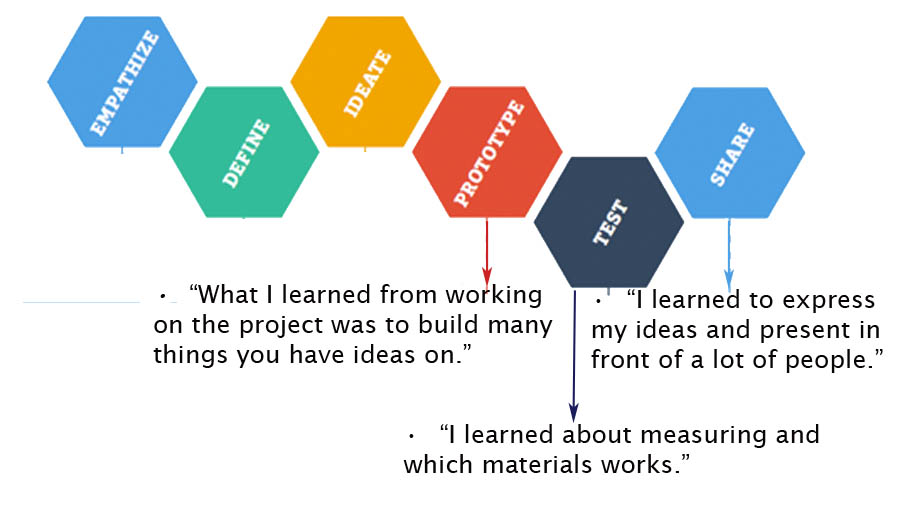
In the first survey, students described what they wanted to do (“make stuff”, “drawing, inventing”). In the last survey above, they start to focus on achievements and challenges throughout their design process for their project, such as presenting their work at the school assembly or learning how to determine what materials worked best for their models. In addition, the students also made direct connections to the design process when reflecting on their learning experience, which was the primary focus for the the project.

design-process

Design Process by IDEAco, City X Project

My students have shown that they can express their expectations for their learning experience as well as recognize the primary concept(s) of a project. Surveys can be used as a starting point for in-depth self assessment, and can also be incorporated to help students when they are struggling to discern the successful aspects of their work as well as the components of their project they need to improve or address.


Example Self-Assessment Tool #2:  Claim for a Grade (Pass or Fail)

5th Grade Project 2013: “RubeGoldBridge Problem”

School: The Hillbrook School

Curriculum Designer: Christa Flores

At Hillbrook we give students grades, even for electives. I teach 5th grade problem based science and electives in entrepreneurialism to 7th and 8th graders. In an effort to protect a growth mindset around process and creativity, I base grades not on working prototypes or tests or rubrics, but on a pass/fail point system. I feel comfortable giving points for the written or visual submission of an argument because the only way to lose points is to turn in work late. Self-assessments such as these can be used effectively when the criteria for quality is co-created with the students. Students also feel more comfortable grading themselves when the defense of pass or fail is concrete.  Students are asked to show evidence of their own learning, either soft skills or measurable skills.

When I ask my students to list reasons why they earned their grade, I encourage them to list all the things that represented new learning or growth in an area they had been working in. Using this system you can support the wide range of learning that is happening in a self-directed learning space. Students will self-report using above grade level math skills to solve problems, specialized tools for measurement, practicing new leadership skills, learning a new technology like programming or CAD, and the list goes on. The claim/evidence/reasoning or persuasive essay  format (sometimes this is a movie made in Explain Everything for students that struggle with writing) is only one form of assessment that encourages a student to defend and reflect on their learning. Public showcase of work also allows students to communicate their understanding of their problem to an audience.

An example of how I do this with my 5th graders can be seen at the end of the four month long “spring hard problem.” The project is based on a prompt of 3-5 rules, such as: 1) Do work on a 75 gram steel ball  (move the ball from position A to B) 2) with an input and output that connects to two other teams’ machines 3) and bridges two or more forms of energy.  After months of trial and error, design and redesign and team building, I knew that my students were having a very rich experience, but accessing it and getting out in the open or even on paper was a huge challenge.  Thats when I decided to start looking at self-assessments. Below is the first one I presented to my 5th grade.

screen-shot-2014-06-21-at-7-24-56-pm

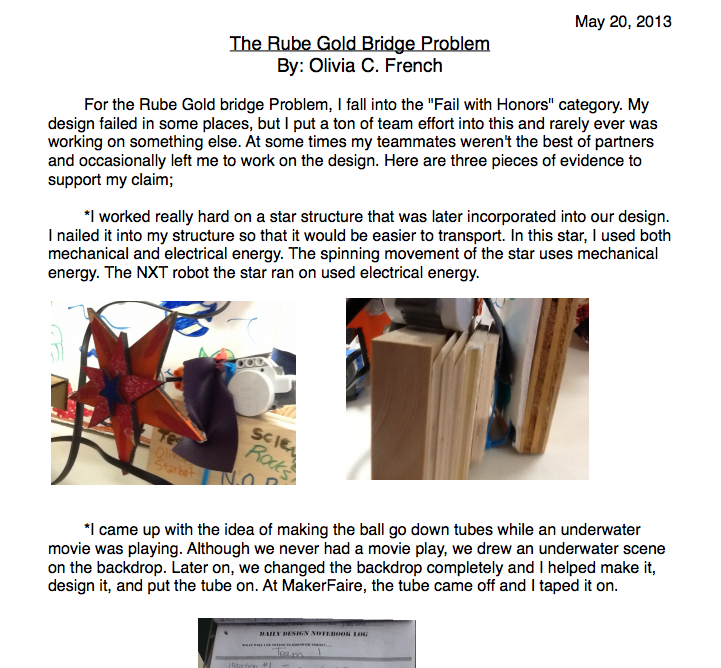
My 5th graders had no problem telling me what they had done to support their team, or the way they took risks or problems they had solved. Their ability to make a valid argument was so impressive, I continue to use this form of assessment at the end of all of my projects, including my electives.  Below is an example of one student’s self-assessment for the RubeGoldBridge problem.  This style of assessment allows students to use argument and communication skills that are appropriate for that student. It also shifts the role of assessing progress from the adult to the learner, a goal we are striving for in the Middle School at Hillbrook.

screen-shot-2014-12-29-at-9-39-53-am

Reproducing/replicating workpieces

This article has colaboration of Pietro Domingues.

In this section we will see how to reproduce workpieces using many materials.

c_1

Some materials we can use at room temperature, such as Plaster of Paris and resin. Other
materials must be melted at higher temperatures, such as Tin and Paraffin wax.

Plaster of Paris

Materials:
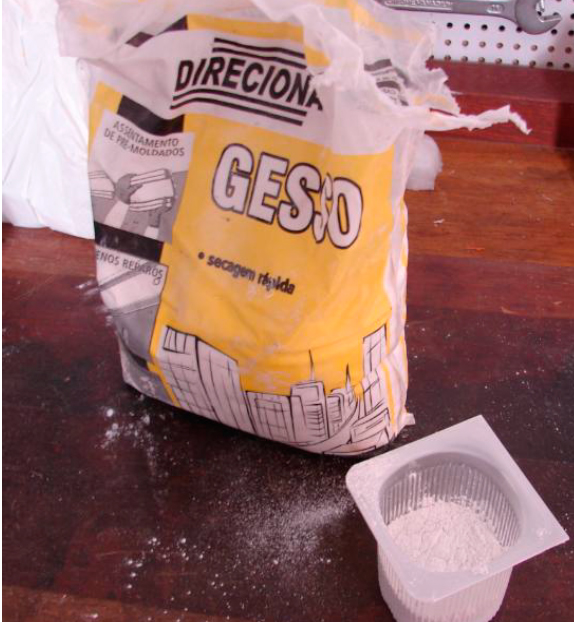
Plaster (dry powder)
Container
Stick

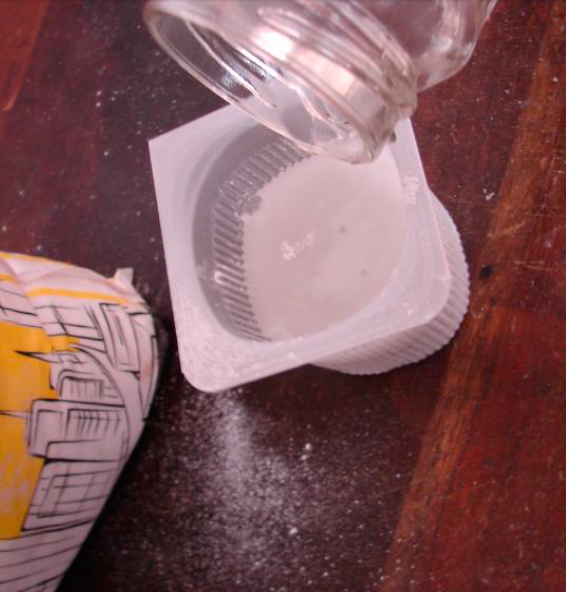
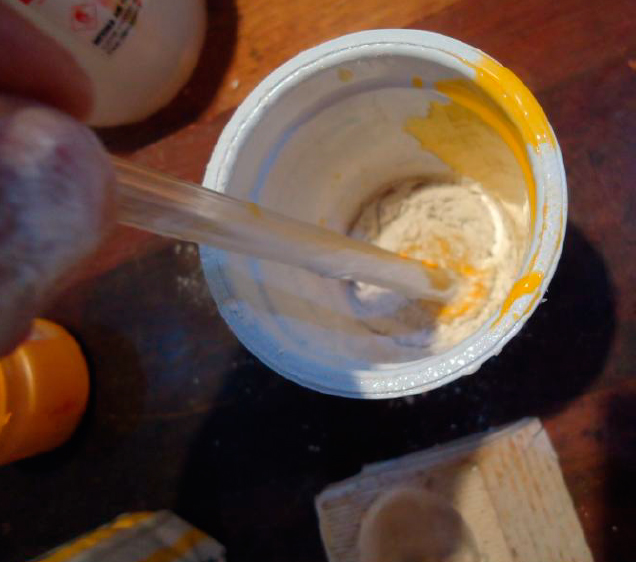
1 – Drop water and dry plaster powder at the same amount in the container.

c_2

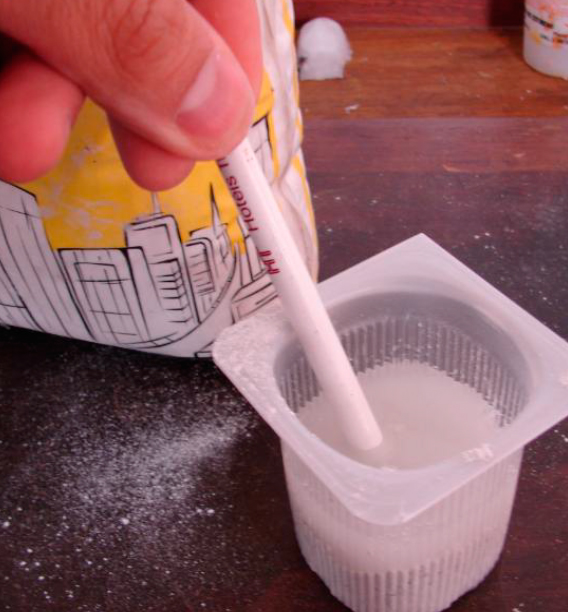
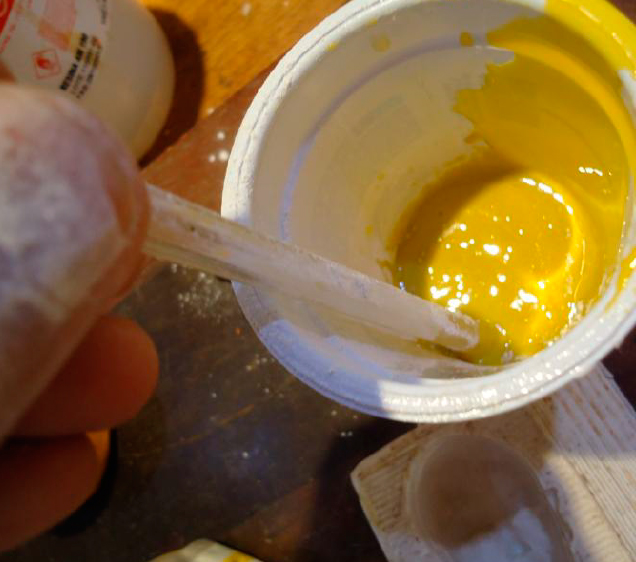
2 – Stir the mix (Just a little)

c_3 c_4

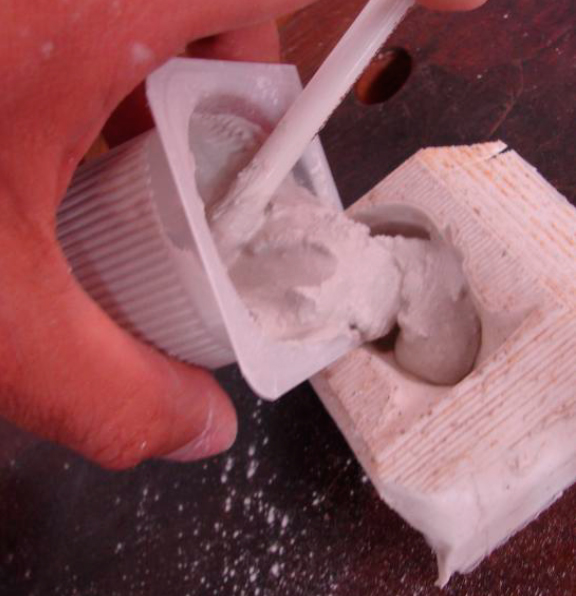
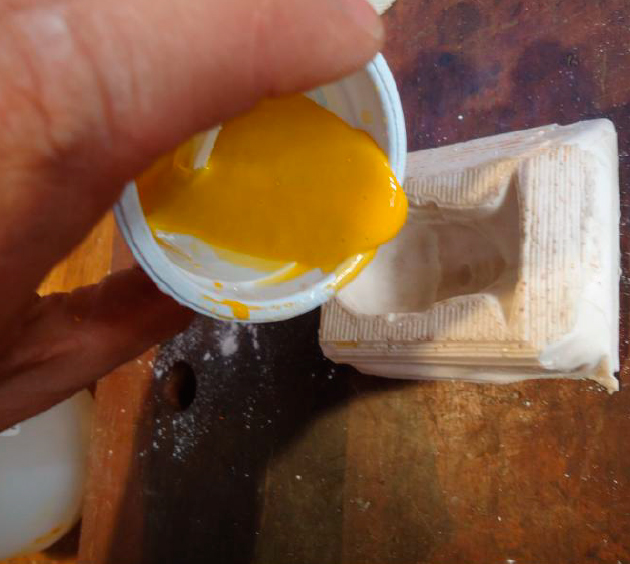
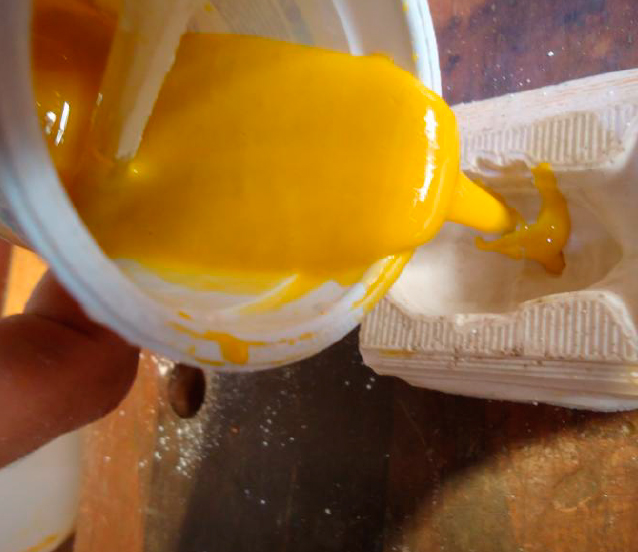
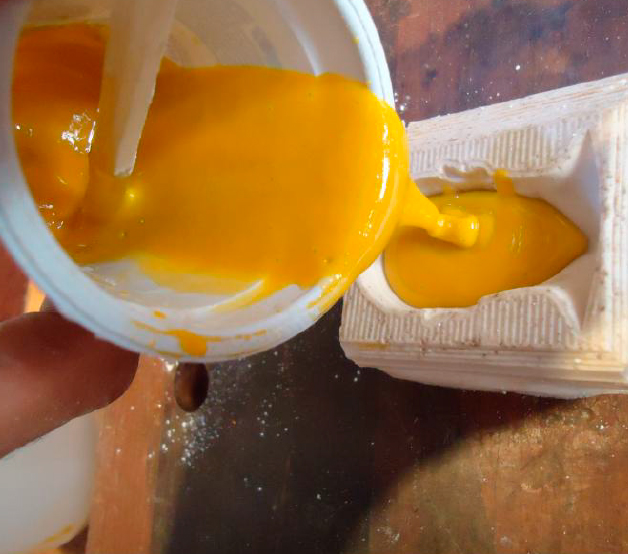
3-After getting a good mix, drop it into the mold. If necessary, forces the mix against the mold
to ensure that the mold is filled

c_5_

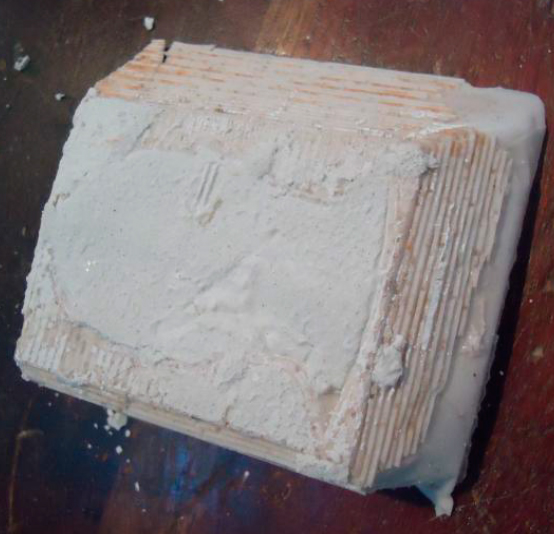
4 – The setting of unmodified plaster is complete after 30 minutes, and the workpiece is ready.

c_6 c_7 c_7_1

Polyester Resin

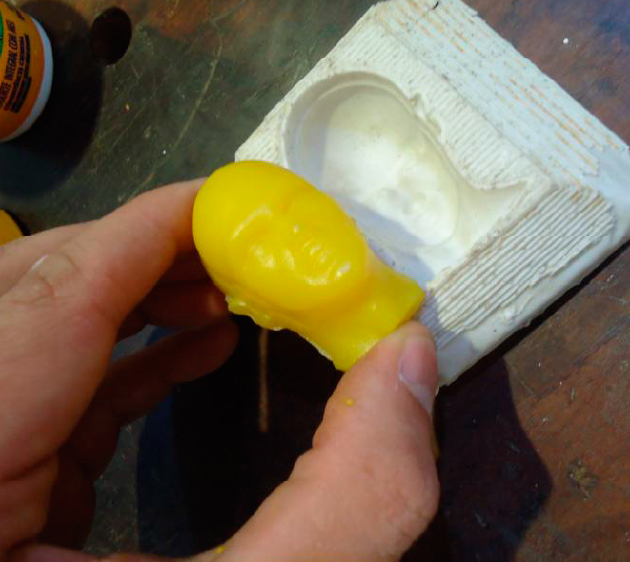
Polyester resin are great to make low cost reproductions, keeping the same quality. Although the mechanical resistance of this material is not high, it can be used in some mechanical applications.
It’s highly used by artisans to manufacture fridge magnets, miniatures, keychains, etc.
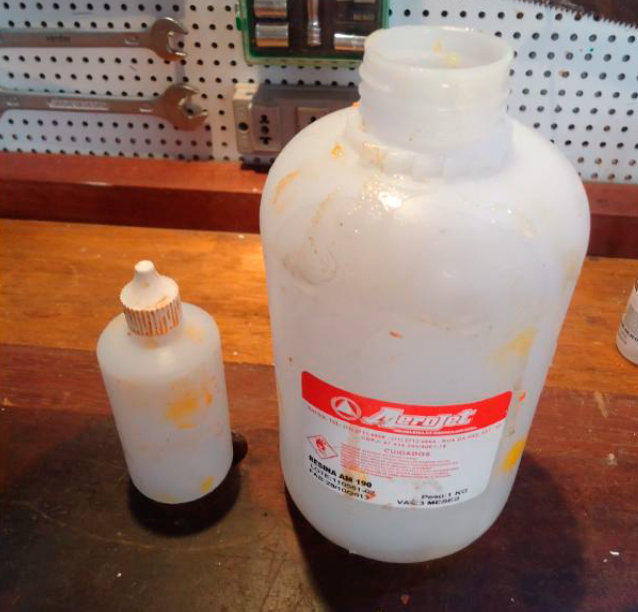
As Silicone, resins are manufactured in liquid state. We need a catalyst to give a shape to the object.
Warning: It’s highly recommended to work in a fresh place, using gloves, glasses and if possible, an air-purifying respirator.

Materials:
-Resin (liquid)
-Catalyst (it comes with the resin)
-Small container

c_8

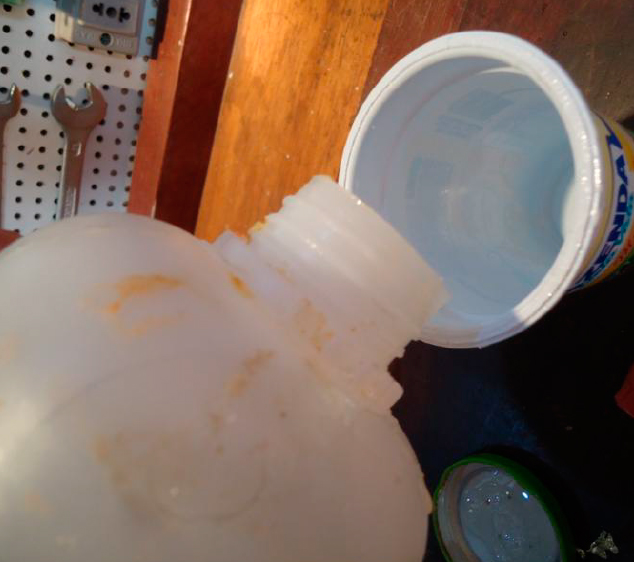
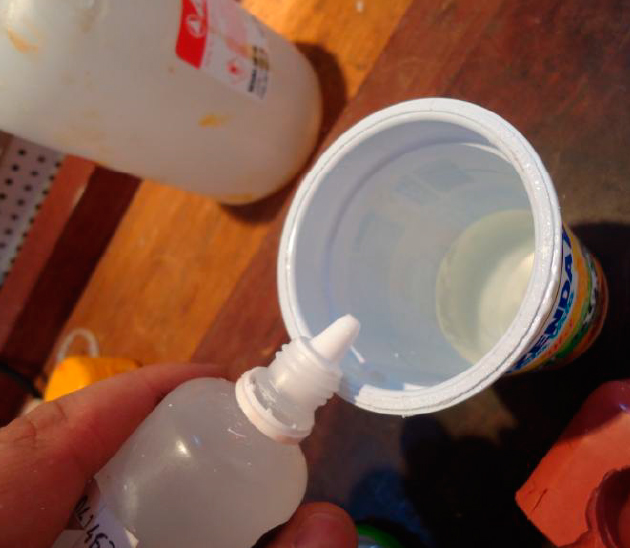
1-We must drop the catalyst and the resin in the container on the according amount
(described on the manual)

c_9 c_10

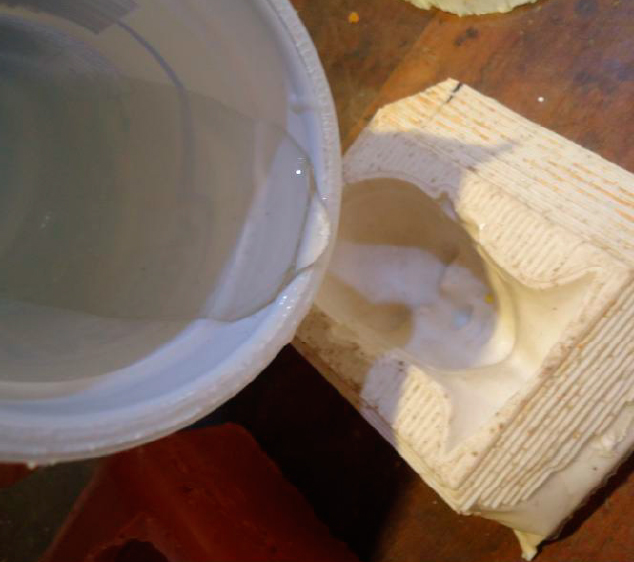
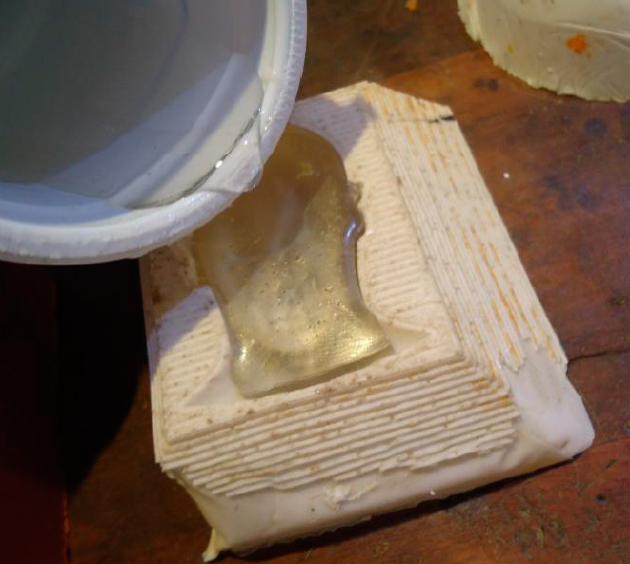
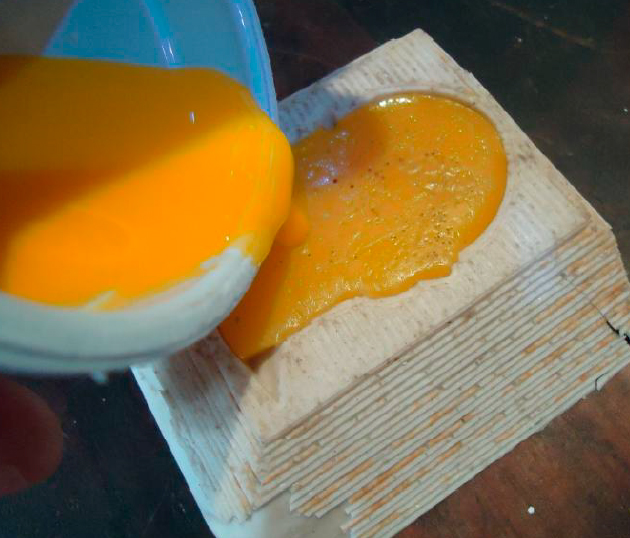
2-Mix the resin and drop it into the mold.

c_11 c_12

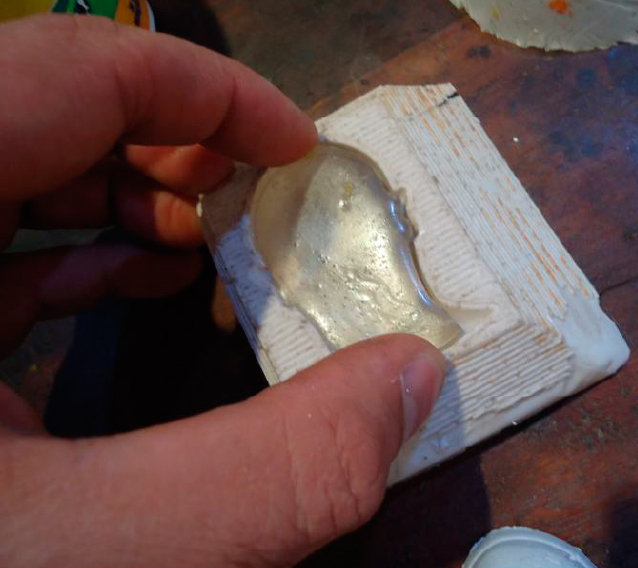
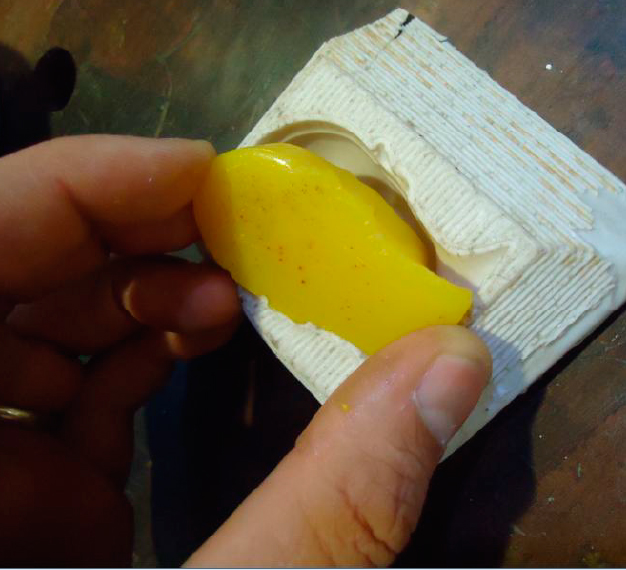
3-Let the resin cure. It takes 30 minutes to 2 hours. It depends on climate conditions.

c_13 c_14

4-Now it’s ready! In this example, the resin was prepared without any pigment. We can use
special pigments (made for this application).

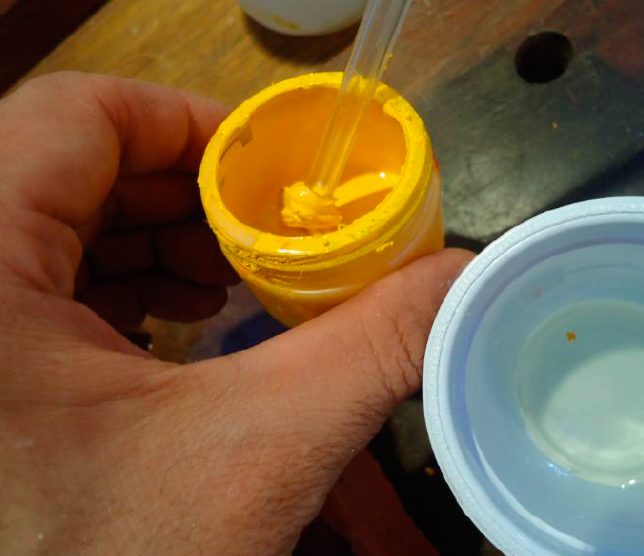
The pigment is manufactured as a paste. It’s added in the resin according to the concentration
of the color desired.

c_15 c_16 c_17 c_18 c_19 c_20 c_21

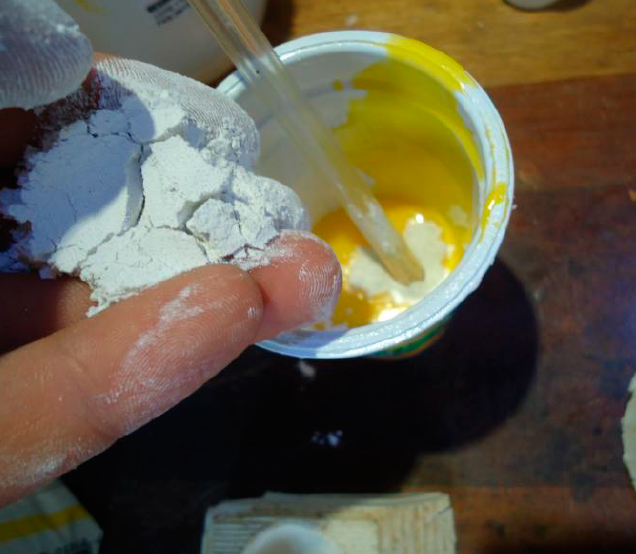
To spend less resin, there are some aggregates that can be added, such as Talcum powder, marble powder, wood flour, etc.

c_22 c_23 c_24 c_25 c_26 c_27

The addition of aggregates modifies the viscosity of the liquid and the color of the workpiece.
Here is the difference between the two methods (on the left, just resin, and on the right, 30% of talcum was added)

c_28 c_29

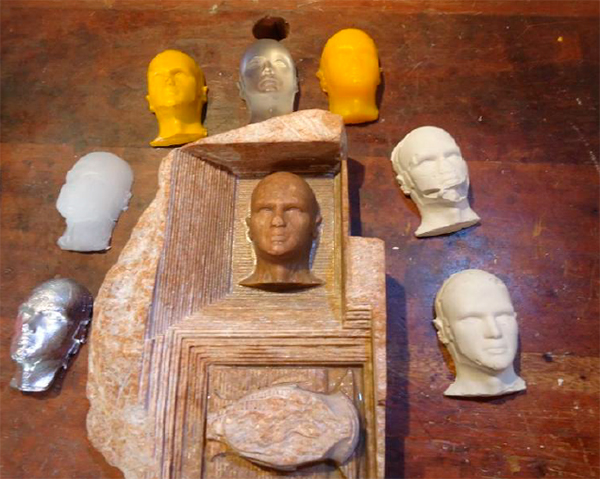
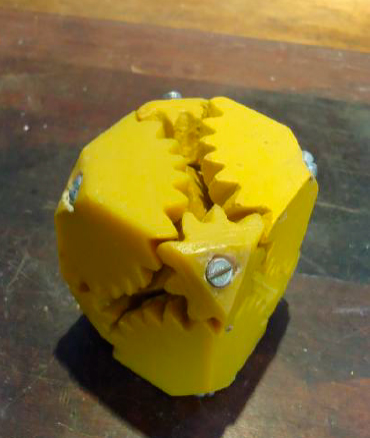
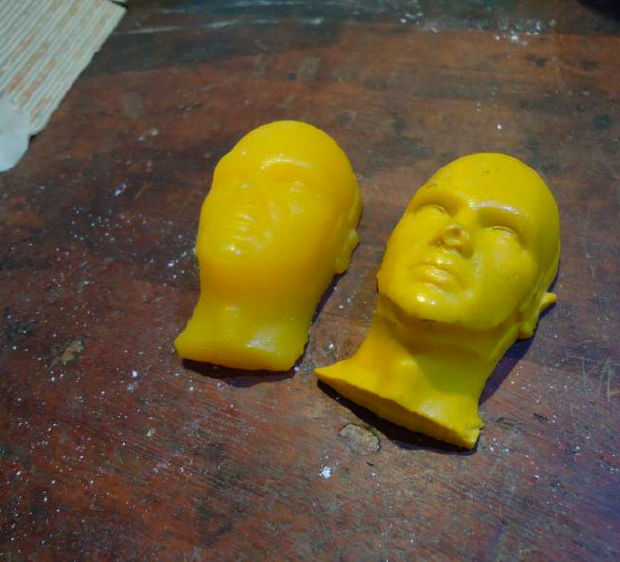
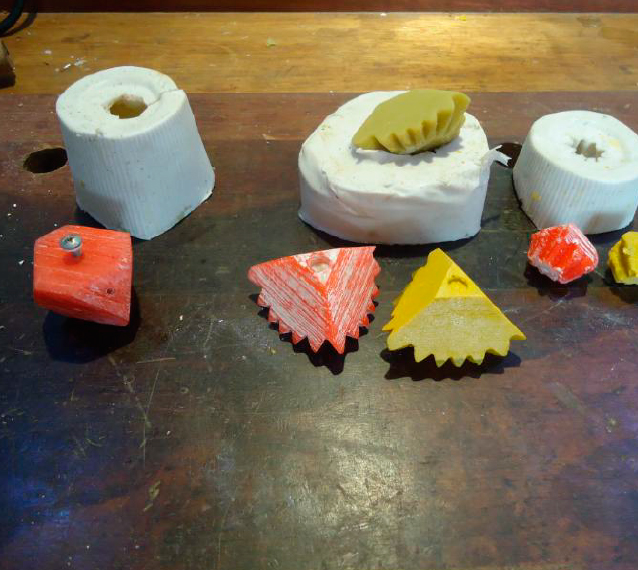
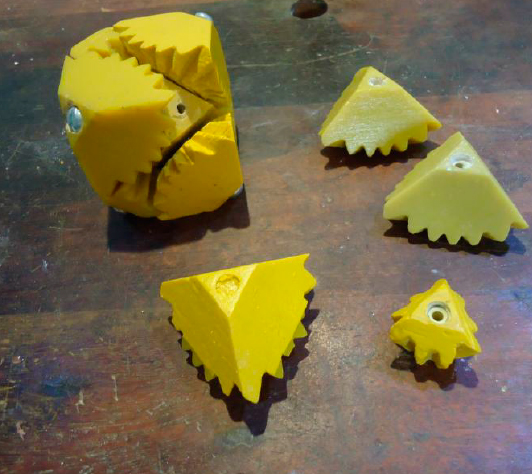
This is a fast technique used to replicate complex parts that would take a long time to be made in a 3D printer, at the same time that the workpieces reproduced seem like the 3D-printed one. On the image, the red workpieces were 3D-printed, and the yellow were made with this process. We used spackling paste and using a sandpaper, we obtained a smooth and flat surface, ready to make a mold. With the molds, four parts were replicated, and so we assembled a Gear Cube. Actually with
these techniques, it’s possible to build anything at home.

c_30 c_31

Reproducing using melted materials
Tin and paraffin wax are materials with a low-melting temperature. Because of this, they can
be melted at home with a cooker, a Bunsen burner, etc. In this experiment, it’s highly
recommended to use adequate personal protective equipment, such as gloves, glasses,
adequate shoes.

Paraffin wax

c_32 c_33

Paraffin is derivable from petroleum, and candle are made of paraffin. To get paraffin we can melt candles, but it’s is also commercialized in small grains.

Materials:
-Paraffin
-Metallic container

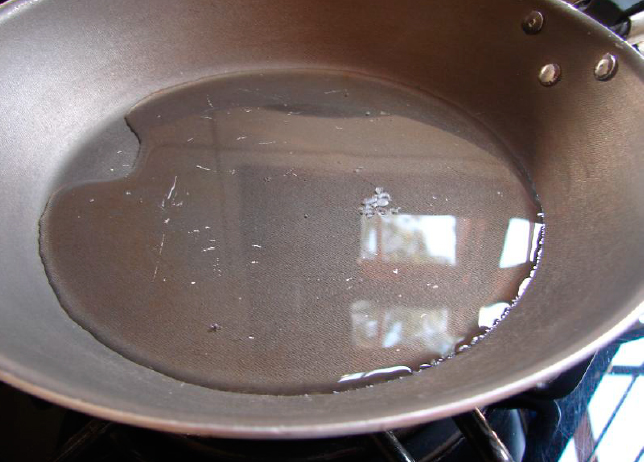
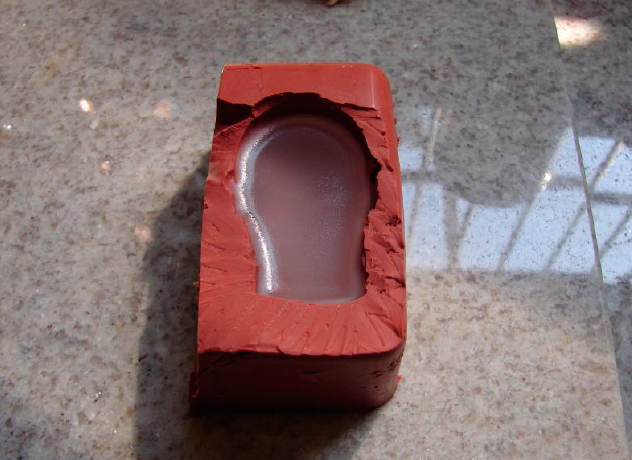
1-Drop the paraffin into the metallic container and burn it to 60°C. You can use a frying pan, in this case you’ll need to burn it carefully and if necessary ask someone help. If you use a cooker and a pan, the flame must be low. Avoid moving the pan abruptly and do not put the paraffin directly on fire (it is inflammable!). In case the paraffin is on fire, cover it with a lid bigger than the pan.

c_34 c_36 c_38

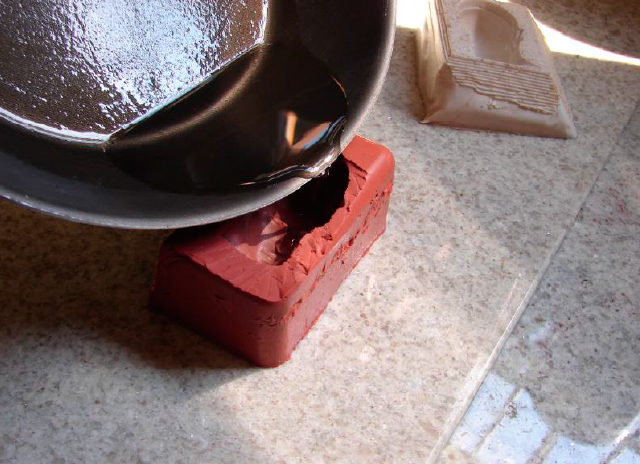
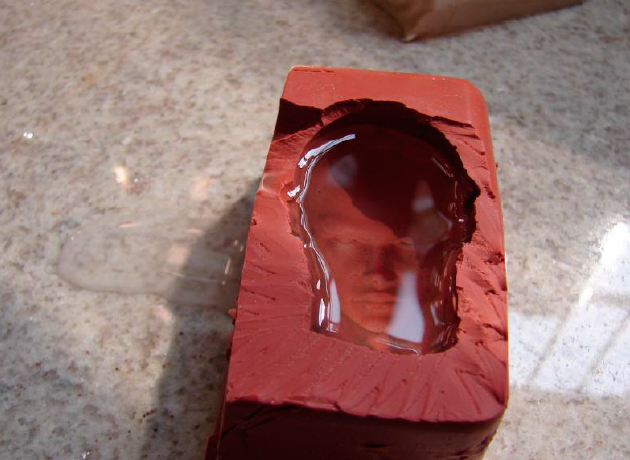
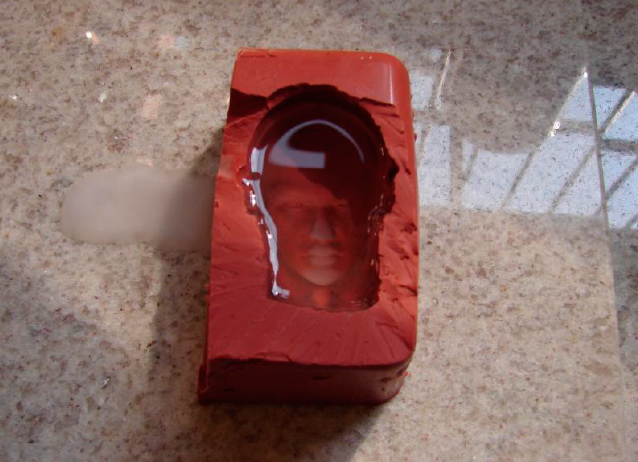
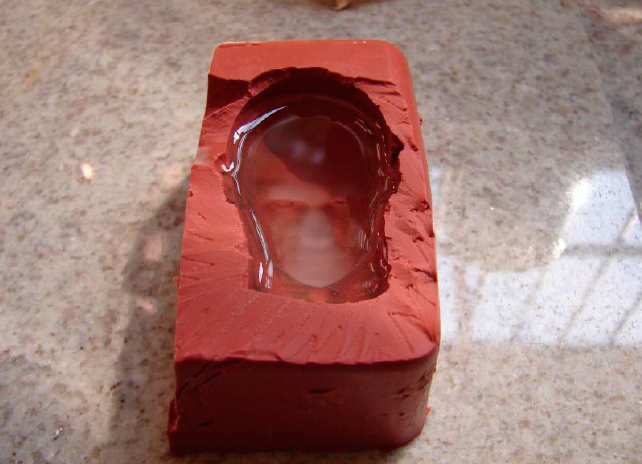
After all the paraffin is melted, drop it carefully into the mold.

c_39

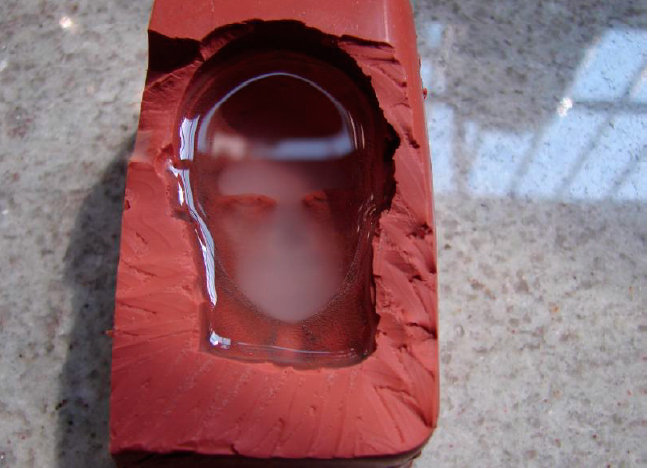
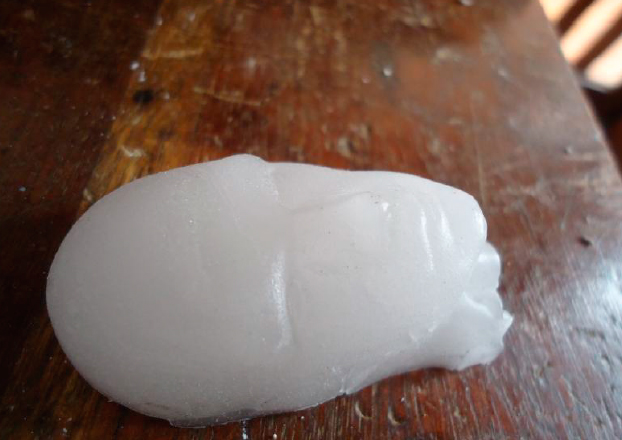
The solidification is slow, it takes 15 to 45 minutes depending on the size of the workpiece.
As the material solidifies, it gets an opacity appearance. We can see on these photos:

c_40 c_41 c_42 c_43

Even if the workpiece is entirely opaque, it’s recommended to wait for more 30 minutes,because the center may still be liquid.

c_44 c_45 c_46

Tin

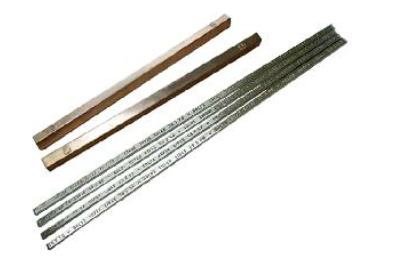
Using a similar method, but at not so high temperature, we can melt tin and lead (the last one is not used for obvious reasons!). Tin can be obtained from hardware shops (it is sold as bars, used to solder copper tubes).

c_47

There is another kind of tin, used to solder PCBs, but its composition is different, and when it is melted, it releases a toxic gas that is prejudicial in a high amount.
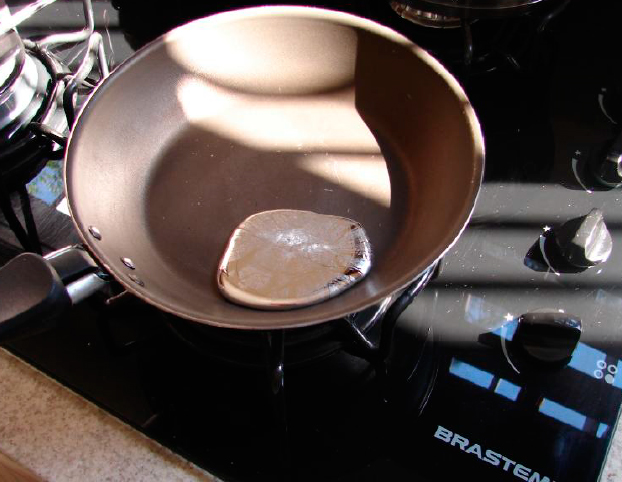
The method of melting the tin is the same as the paraffin. You can use a cooker as well, and the same care is needed.
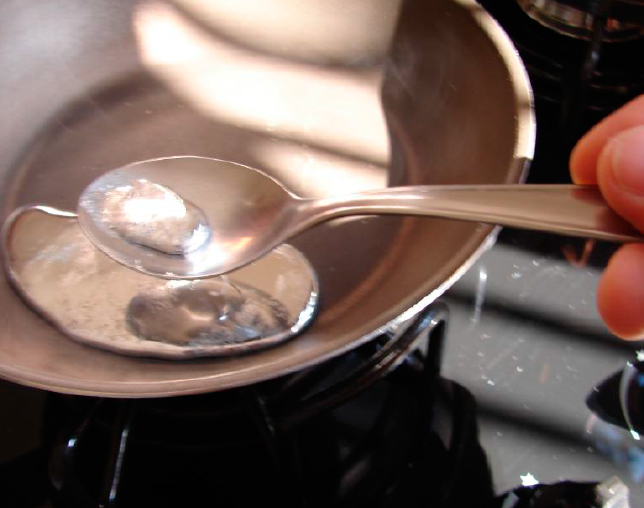
Cut the approximate volume that you will need for the molding, and melt it in a metallic container or a frying pan. The melting process can take some minutes.

c_48

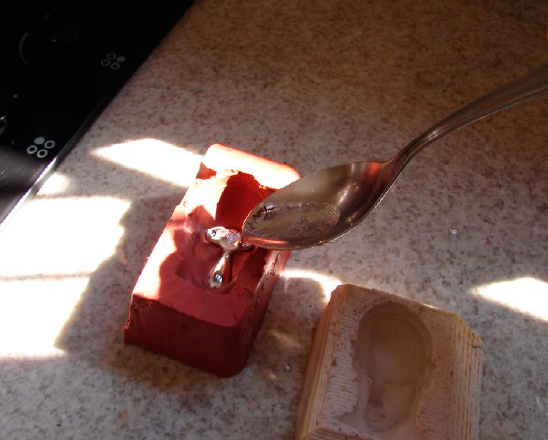
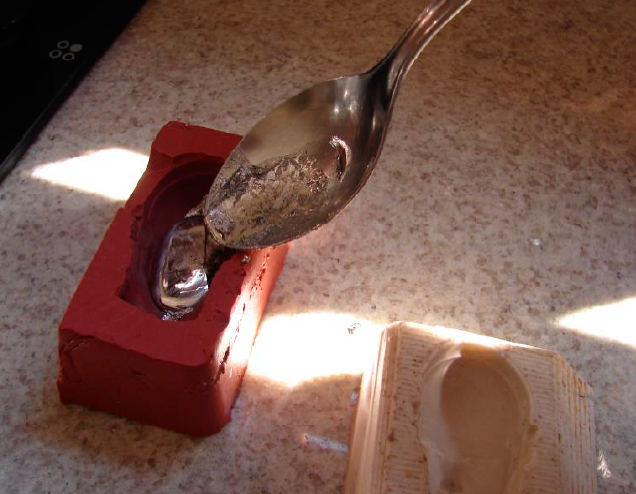
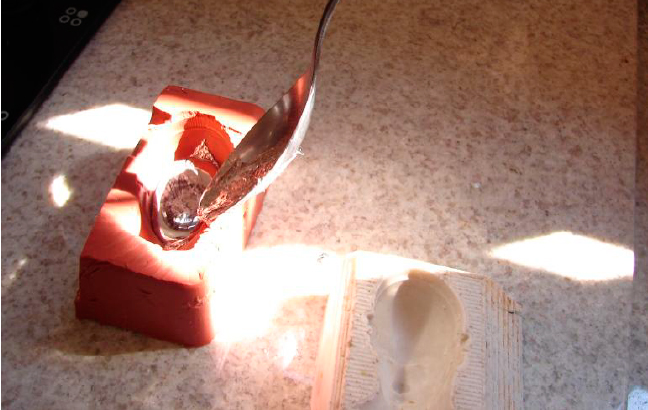
After completly melted, pick small amounts of tin with a spoon and drop it carefully into the
mold. Repeat this until the whole mold is complete.

c_49 c_50 c_51 c_52

It’s recommended to wait for 30 minutes before touching the mold. Even after it solidifies, it’s better to not touch it directly. To guarantee the workpiece is good to handling, the best is to contact the mold with water.

See too:

The molds of Civilization
http://fablearn.stanford.edu/fellows/blog/molds-civilization


How to make silicon molds
http://fablearn.stanford.edu/fellows/blog/how-make-silicone-molds

What a Maker Teacher Does

I’m just loving the variety of posts here! Reading the last few weeks, it really made me think about the role of the teacher/leader in creative, hands-on classrooms and educational spaces. In these posts, we can see that teachers are planners, observers, catalysts, researchers, yearners, gurus, thinkers, and yes – makers! It’s such a colorful palette of roles when compared to the perception of the teacher as a content delivery system and classroom manager.

How do we convey this complexity to the general public? Or even more daunting, to parents, children, families, politicians, and communites we work with?

You all are obviously doing it locally by example, and by sharing these posts, spreading it wider.

It’s an interesting dilemma, to exist in a space where people think they “know” how it works (after all, everyone has been to school) and yet the memories seem to merge towards a common misty memory of TV and movie portrayals of classrooms from Welcome Back Kotter to Room 222 and now Glee or even The Wire. In these classrooms, teachers who are inspirational are almost always portrayed as fighting the system – like Dead Poets Society, or idiot savants like School of Rock. In the media, teachers are mostly dramatic devices who simply act as a foil for the more interesting lives of their students who aren’t allowed to really express themselves in the boring nothingness of school.

So even popular culture expresses this discontinuity between the boring, bored, and disconnected teacher vs. the ideal of connected, interested, and interesting teacher. Yet the first is the typical (and accepted) and the later the exception (yet yearned for).

The only way I see to change this is to keep doing what we are doing! Sharing these posts that illustrate the rich and complex story of what it means to be a teacher and what these learning spaces look like. You all inspire me so much!